Outboard Engine Hours: What's Low, Average and High — and Why Condition Beats the Number
- The ECU counts every minute the engine runs — idling and trolling included.
- Typical recreational use is roughly 30–50 hours a year; judge hours against age, not in isolation.
- A serviced 800-hour motor can be a better buy than a neglected 200-hour one.
- Gauge and ECU hours often differ — the ECU printout is the record to trust.
- Saltwater hours are harder hours: cooling passages and corrosion decide a motor's real age.
Ask about any used outboard and the first number quoted is its hours. It is treated like an odometer reading — one figure that supposedly sums up how much life is left. Hours matter, but they are widely misunderstood: buyers walk away from good engines with honest hours and pay premiums for low-hour engines neglected for a decade. This guide explains what an hour actually is, what low, average and high look like at each age, and why the number should start your questions rather than end them. It pairs with our used outboard inspection checklist and the motors in our pre-owned outboards range.
How hours actually accumulate
On a modern fuel-injected engine, the engine control unit (ECU) counts from the moment the engine runs until it stops. Every minute counts the same on the clock: a minute trolling at idle adds as much to the total as a minute at full throttle, though the wear is very different. A diagnostic printout usually breaks the total down by rpm band, and that breakdown is genuinely useful — an engine that has spent most of its life at trolling and cruise speeds has generally led an easier life than one that has lived at wide-open throttle.
Older motors complicate the picture. Carburetted engines without an ECU rely on a dash hour meter, which on some installations counts time with the ignition on — including drifting with the engine off and the key left on. Small motors often have no meter at all, and any figure quoted for them is an estimate. Treat the source of the number as part of the number.
Low, average and high: hours by age
As an industry rule of thumb, a typical recreational boat accumulates roughly 30 to 50 hours of engine time per year — a season of weekends and a holiday trip or two. Commercial and charter boats sit far outside that band and can add several hundred hours a year. Using the recreational band, hours by age look like this:
| Engine age | Low | Typical | High |
|---|---|---|---|
| 1–3 years | Under 100 hrs | 100–150 hrs | 250+ hrs |
| 4–6 years | Under 200 hrs | 200–300 hrs | 450+ hrs |
| 7–10 years | Under 350 hrs | 350–500 hrs | 750+ hrs |
| 11–15 years | Under 500 hrs | 500–750 hrs | 1,100+ hrs |
| 16–20 years | Under 650 hrs | 650–1,000 hrs | 1,500+ hrs |
Rule-of-thumb bands for recreational use. Commercial and charter engines accumulate hours far faster and should be judged on maintenance history instead.
Read the table as context, not verdict. Low hours are not automatically good news: an engine that has sat unused for years can suffer perished seals, stale fuel damage, corroded cooling passages and a seized impeller — the classic low-hour, low-care trap. High hours are not automatically bad news either. What the bands tell you is what to ask. A figure far above the band asks where the motor worked; a figure far below it asks how it was stored and whether it was serviced on calendar intervals — because oil, impellers and anodes age whether the engine turns or not.
Saltwater hours versus freshwater hours
An hour is not an hour everywhere. Saltwater accelerates corrosion in cooling passages, around fasteners and thermostat housings, and in electrical connectors. Saltwater boats also tend to run further, in rougher water, under heavier load. Hour for hour, a freshwater engine has usually had the easier life, and freshwater motors are prized on the used market for good reason.
But the label is not the verdict. A saltwater engine flushed after every trip, kept on a lift or trailer, with anodes replaced on schedule, can be mechanically younger than a freshwater engine that sat in a slip for a decade with maintenance deferred. Salt leaves evidence — crust in the tell-tale outlet, corrosion under the cowling, eaten anodes — and a proper inspection reads that evidence directly. This is one reason the steps in our used outboard checklist matter more than the hour figure on the advert.
Why a serviced 800-hour motor can beat a neglected 200-hour one
Engines do not wear out on a schedule; they wear out on a maintenance history. Consider two ten-year-old motors. The first shows 800 hours, a folder of service records, fresh anodes, even compression, clean gear oil and a printout showing most of its life at cruise rpm. The second shows 200 hours, no records, milky gear oil, one cylinder reading low and corrosion creeping under the paint. The first motor has used more of its life; the second has wasted more of it. The 800-hour engine is the buy.
The pattern is consistent: regular oil and filter changes, impellers replaced before they fail, thermostats and anodes on schedule, fuel kept fresh and the engine run regularly rather than stored wet — these habits decide how an engine ages far more than the raw count. When comparing motors in our pre-owned outboards listings or anywhere else, weigh the evidence of care at least as heavily as the hours, and keep your own engine on the same footing with our guide to how to maintain an outboard motor.
Hour meter versus ECU: why the numbers disagree
Sellers are sometimes accused of dishonesty when the dash gauge and a diagnostic printout show different totals. Usually there is a duller explanation:
- The gauge was replaced. Hour meters fail, fog and get swapped during dash refits. A replacement meter starts at zero or at whatever it was set to — it does not inherit the engine's history.
- The meter counts key-on time. Some installations record whenever the ignition is on, adding hours while the engine sits silent.
- The ECU was replaced. A replacement engine control unit starts its own count, so the printout reflects the unit's history, not necessarily the powerhead's.
- Multi-engine rigs drift apart. On twins, the engine used for trolling accumulates hours faster than its partner.
The working rule: where an ECU printout is available, it is the most reliable record of running time, and small gaps between sources are normal. A large, unexplained gap — a gauge showing half the ECU total with no replacement story — is a reason to dig deeper or walk away. Pair the printout with compression figures and service records and you have a picture no single number gives you.
Shop the motors in this guide
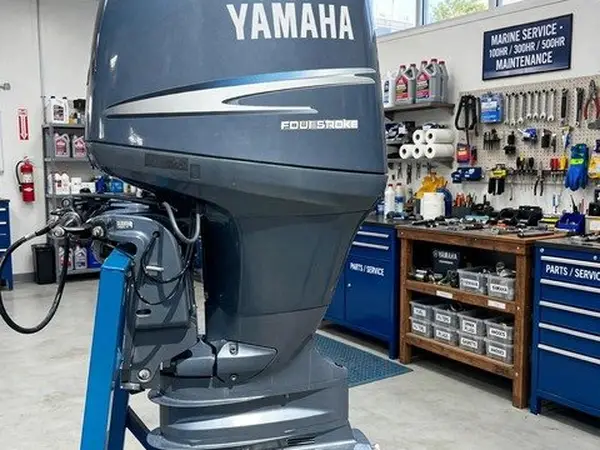 Pre-Owned
 Pre-Owned
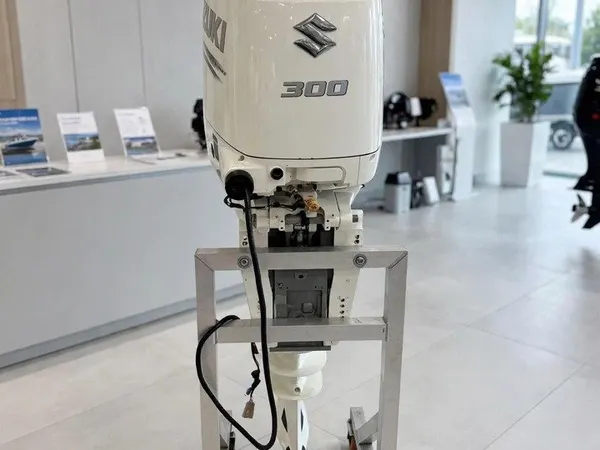
2018 Suzuki DF300 4-Stroke Outboard — 300HP, 30-Inch Shaft, 900 Hours
- 2018
- 300 HP
- 900 hrs
- 30" shaft
 Pre-Owned
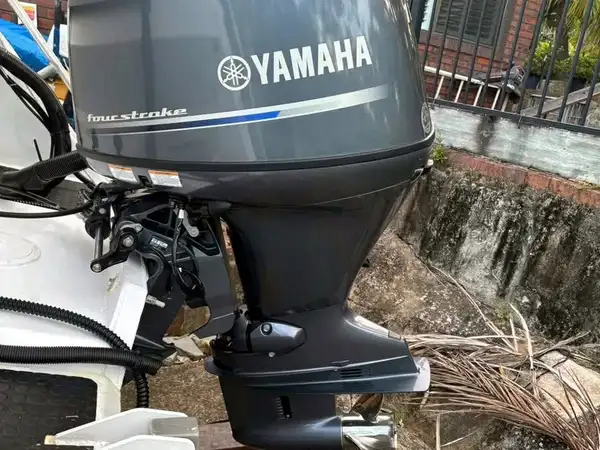
2024 Yamaha F115LB — Just 24 Hours, Still Under Warranty
- 2024
- 115 HP
- 24 hrs
- 20" shaft
 Pre-Owned
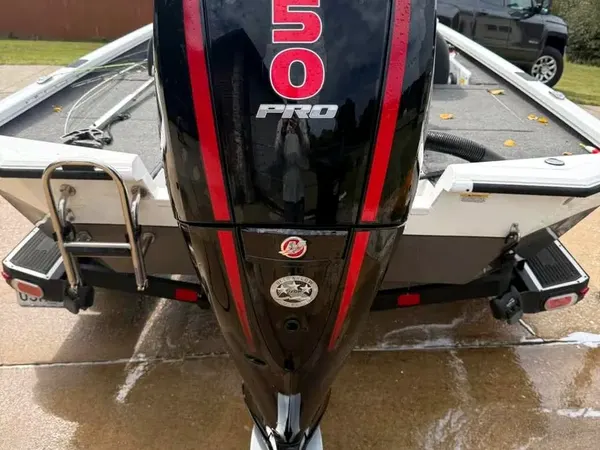
2024 Mercury 150 Pro XS — 12 Hours, Transferable Warranty to Oct 2028
- 2024
- 150 HP
- 25" shaft
Every motor is photographed as offered and listed with its price, freight and deposit on its page. Comparing hours across the range? The full selection is in pre-owned outboards.
Frequently asked questions
How many hours is too many on a used outboard?
There is no fixed ceiling. A modern four-stroke serviced on schedule commonly runs well past 2,000 hours, and commercial engines go far beyond that. What matters is hours relative to age and evidence of care: service records, even compression, clean gear oil, a healthy ECU printout. A neglected motor can be worn out at 300 hours; a maintained one can be a sound buy at 900.
Is 500 hours a lot for an outboard?
On a two-year-old motor, 500 hours means heavy use — charter, commercial or very keen recreational running — and the price should reflect it. On a ten-year-old motor, 500 hours is exactly average recreational use and nothing to fear if the maintenance matches. Judge the number against the age of the engine, never on its own.
Why do the hour gauge and the ECU show different numbers?
Because they measure different things and one of them gets replaced. Gauges are swapped when they fail or when a dash is refitted, and the new gauge starts from zero or inherits nothing. Some analogue meters also count key-on time, including time spent with the engine off. The ECU records actual engine running time from new, which is why a diagnostic printout is the figure to trust.
Do saltwater hours count more than freshwater hours?
In wear terms, yes. Salt accelerates corrosion in cooling passages, fasteners and electrical connections, and saltwater motors are more likely to have run in rough, loaded conditions. A flushed, anode-maintained saltwater engine can still age gracefully, but hour for hour a freshwater motor has usually led an easier life.
Can outboard engine hours be tampered with?
A dash gauge can be replaced or disconnected, which is exactly why gauges alone prove little. The ECU's internal counter is far harder to falsify and is what a diagnostic printout reads. Where the ECU itself has been replaced, the printout reflects the replacement unit's history — another reason to weigh the printout alongside service records and the motor's physical condition.
Related guides
- Buying a used outboard: the inspection checklist
- How to maintain an outboard motor
- Repowering your boat: the complete guide
Talk to a specialist
Comparing two motors and not sure how to read their hours? Call +1 754-251-4847 or request a quote with the model, year and hour figures you are weighing up. Browse the current range in pre-owned outboards or keep reading in the guides hub.