Outboard Model Numbers Decoded: Yamaha, Mercury, Suzuki & Honda Letters Explained
- The model plate is the motor's identity: brand family, horsepower, shaft length, rotation and generation in one string.
- Shaft letters are near-universal: S = 15 in, L = 20 in, X = 25 in, U = 30 in.
- Brand prefixes name the family — Yamaha F and VF, Suzuki DF, Honda BF — and Mercury builds its code from option letters like ELPT.
- Suffix letters are the brand-specific part; decode them by that maker's convention, not another's.
- Always confirm the code against the plate and the owner's manual for the exact year.
Every outboard advert quotes a string of letters and numbers — F150LB, 115 ELPT, DF175APX, BF225 — and to most buyers it reads like a parts-bin code. It is actually a compressed specification sheet. Read properly, the model number on the plate tells you the engine family, the horsepower, the shaft length the motor was built with, how it starts, how it is controlled, whether it has power trim, whether it is a counter-rotating model, and which generation of the design you are looking at. That is most of what you need to know before any other inspection begins.
This guide decodes the four big brands letter by letter. It is the companion to our used outboard inspection checklist, where reading the plate is step one, and to the shaft length guide, which covers measuring your transom to match the letter you find.
Why the plate matters
The model and serial plate — usually riveted to the transom bracket — is the only description of the motor that cannot be a misunderstanding. Adverts are written from memory, boats get re-engined, and a motor described as a 25 inch shaft can turn out to be a 20. The plate settles it. It also matters beyond the purchase: parts are ordered by model and serial, service bulletins apply by serial range, and a dealer confirming a motor's year, original specification or recall status starts from that plate. Get into the habit of photographing it on any motor you inspect, and of checking that the serial on the plate matches the paperwork.
The near-universal part: shaft letters
One piece of the code is shared, with rare exceptions, by every major brand. A single letter in the model string states the shaft length the engine was built as — the distance from the mounting bracket to the cavitation plate, matched to the boat's transom height:
| Letter | Shaft length | Typically fitted to |
|---|---|---|
| S | 15 in (short) | Dinghies, small tinnies and inflatables |
| L | 20 in (long) | Most trailer boats and bay boats |
| X | 25 in (extra long) | Offshore boats and high transoms |
| U | 30 in (ultra long) | Deep transoms and multi-engine offshore rigs |
Typical manufacturer convention — always confirm against the plate and the owner's manual for the exact year.
Where the letter sits in the string varies by brand — Yamaha and Honda place it after the horsepower figures, Suzuki within the suffix, Mercury inside its option-letter block — but the meaning holds. It is the letter buyers most often get wrong, and the most expensive to get wrong: a shaft two sizes too short cavitates and will not plane properly, and two sizes too long drags the gearcase and kills performance. Measure the transom, then read the letter. Our shaft length guide shows the measuring method step by step.
Yamaha: family letter first, specification after
Yamaha codes read left to right: a family prefix, the horsepower, then a string of suffix letters covering shaft length, starting, control and trim, often ending with a generation letter. A code like F150LB breaks down as F (four-stroke family), 150 (horsepower), L (20 inch shaft), B (design generation).
| Code | Meaning |
|---|---|
| F (prefix) | Four-stroke model line |
| VF (prefix) | V MAX SHO performance four-stroke line |
| L in prefix (e.g. LF150) | Counter-rotating (left-hand) version, for twin rigs |
| E | Electric start |
| M | Manual (rope) start |
| H | Tiller-handle control |
| R | Remote control |
| T | Power trim and tilt on remote models; a T prefix on small motors marks the high-thrust line |
| Final letter | Model generation, advancing as the design is updated |
Typical manufacturer convention — always confirm against the plate and the owner's manual for the exact year.
Two Yamaha notes are worth keeping. First, the generation letter matters for parts: two motors both sold as an F150 can be different generations with different components, which is why parts are ordered by the full code and serial. Second, Yamaha's two-stroke lines used their own prefixes historically, so a code without the F is not a misprint — it is simply an older family. Browse the current range on the Yamaha outboard motors hub to see the naming in use.
Mercury: a code built from option letters
Mercury builds many of its model designations by stacking option letters after the horsepower, so the code reads like a checklist of how the motor is equipped. The classic example is the 115 ELPT: E for electric start, L for long shaft, PT for power trim.
| Code | Meaning |
|---|---|
| E | Electric start |
| M | Manual start |
| H | Tiller handle |
| L / XL | Long (20 in) / extra-long (25 in) shaft |
| C (e.g. CXL) | Counter-rotation version |
| PT | Power trim |
| CT | Command Thrust — a larger gearcase and bigger propeller for more low-end thrust on heavy or high-drag boats |
| DTS | Digital Throttle & Shift — electronic fly-by-wire controls on equipped models |
Typical manufacturer convention — always confirm against the plate and the owner's manual for the exact year.
Mercury's performance families carry their own names alongside the letter codes — lines such as Pro XS and the Racing range signal the intended use rather than an equipment option — and four-stroke models are often marked with the fuel system in listings (EFI). When a Mercury code seems to be missing letters, it usually means those options are absent rather than unlisted: no PT, no power trim. The current range is on the Mercury outboard motors hub.
Suzuki: the DF line and its suffixes
Suzuki's four-stroke range sits under one prefix: DF, followed by the horsepower. The information lives in the suffix letters that follow, which cover the design generation, the control system and the shaft.
| Code | Meaning |
|---|---|
| DF (prefix) | Suzuki's four-stroke outboard line |
| A (suffix) | Updated model generation of that horsepower class |
| AP | Suzuki Precision Control — electronic throttle and shift (fly-by-wire), as in DF175AP |
| L / X in the string | 20 in / 25 in shaft |
| Z (suffix) | Counter-rotation version, for twin rigs |
Typical manufacturer convention — always confirm against the plate and the owner's manual for the exact year.
The A and AP distinction is the one that catches buyers out: a DF175A and a DF175AP are the same basic engine, but the AP's electronic controls need the matching digital rigging, which changes what a repower or a replacement installation involves. Check the suffix before assuming your existing controls transfer. Suzuki models in the current range are gathered on the Suzuki outboard motors hub.
Honda: BF and a short suffix string
Honda designates its outboards with the BF prefix, followed by the horsepower, with suffix letters and numbers recording the shaft length, equipment and production series. The pattern is the most compact of the four brands, and the most dependent on the exact year for its finer details.
| Code | Meaning |
|---|---|
| BF (prefix) | Honda's four-stroke outboard line |
| L / X in the string | 20 in / 25 in shaft |
| Suffix letters | Control type, power tilt and trim equipment and series — the brand-specific part of the Honda code |
| D (later models) | Updated design generation, with electronic shift and throttle available on equipped models |
Typical manufacturer convention — always confirm against the plate and the owner's manual for the exact year.
Because Honda's suffix strings combine several specifications at once, decode them against the owner's manual or a dealer lookup by serial number rather than by letter-by-letter guesswork — the shaft letters are safe to read at sight, the rest deserves confirmation. Honda's current range is on the Honda outboard motors hub.
Putting the plate to work
Decoding is a means, not an end. When you inspect a motor, read the plate against four questions: Is the shaft letter right for the transom it is going on? Does the rotation suit the rig — single, or the correct side of a twin pair? Do the control letters (tiller or remote, mechanical or electronic) match the rigging you have or are budgeting for? And does the serial on the plate match the paperwork exactly? Those four checks, plus the mechanical inspection in our used outboard checklist, will catch most mis-described motors before any money moves. Then browse by brand — Yamaha, Mercury, Suzuki and Honda — with the codes in this guide in hand, and the listings will read like specification sheets instead of alphabet soup.
Shop the motors in this guide
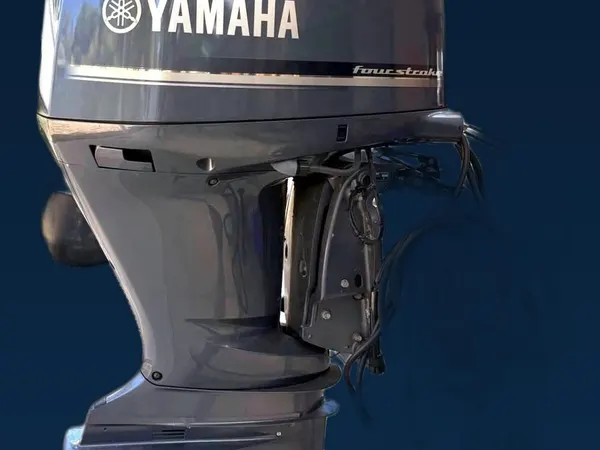 Used — 2020
Used 2020 Yamaha F300 XCA 300 HP Outboard — Freshwater, Full Rigging
- 2020
- 300 HP
- 211 hrs
- 25" shaft
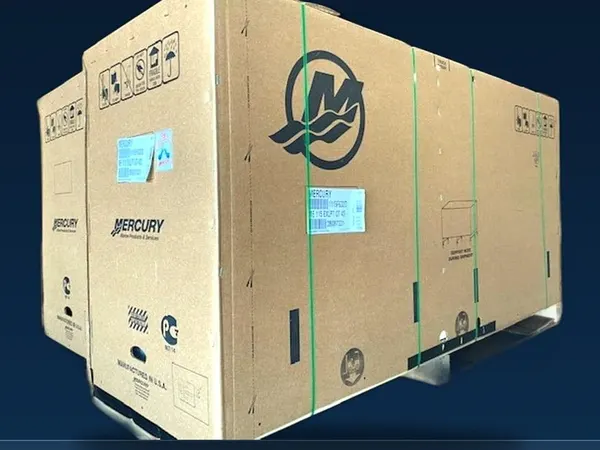 New
New Mercury 115 EXLPT Command Thrust FourStroke Outboard — 25-Inch Shaft
- 115 HP
- Brand new
- 25" shaft
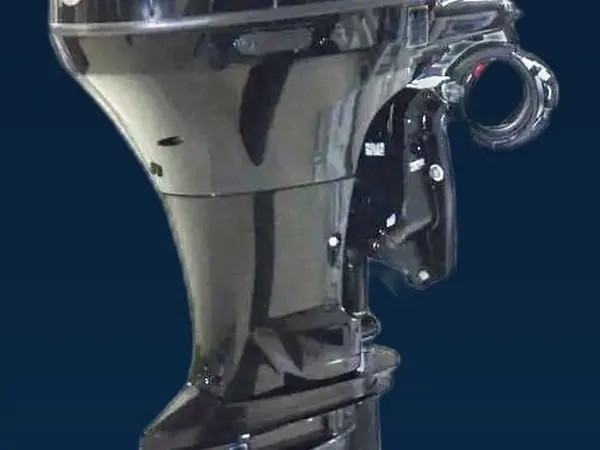 New — 2025 Leftover
New 2025 Suzuki DF175APX 175 HP Outboard — Drive-by-Wire, 25-Inch Shaft
- 2025
- 175 HP
- Brand new
- 25" shaft
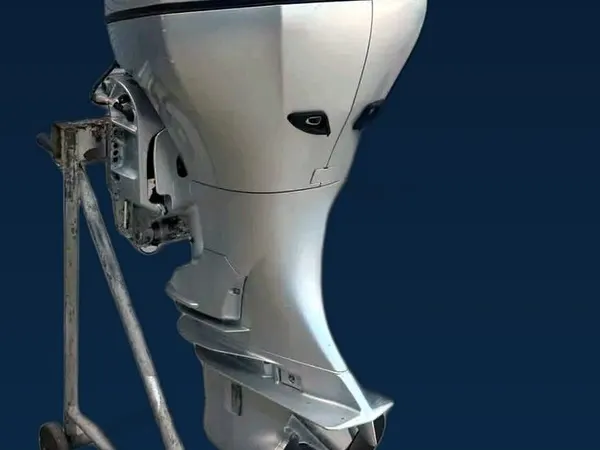 Used — 2013
Used 2013 Honda BF225 225 HP Outboard — XL Shaft, Rigging Included
- 2013
- 225 HP
- 220 hrs
- 25" shaft
Every motor is photographed as offered and listed with its price, freight and deposit on its page — and its model plate details are in the listing, ready to decode with this guide.
Frequently asked questions
Where is the model number on an outboard motor?
On the model and serial plate, which is usually mounted on the transom clamp bracket or the side of the swivel bracket, with a duplicate serial sticker sometimes placed under the cowling. The plate carries the model code, the serial number and the manufacturer's details. Photograph it when you inspect any motor — it is the single most useful record you can take away.
What does the X in an outboard model number mean?
On Yamaha, Mercury, Suzuki and Honda motors alike, X in the model string denotes an extra-long 25 inch shaft. The shaft letters are the most consistent part of outboard model codes across brands: S is a 15 inch short shaft, L is 20 inch, X is 25 inch and U is 30 inch. Always confirm against the owner's manual for the exact year, as individual models can vary.
Can I work out a motor's year from its model number?
Partly. The model code identifies the model family and generation, and the serial number lets a dealer or the manufacturer pin down the exact build year and date. Some brands historically embedded a year letter in the code, while modern plates print the manufacture date directly. For an exact year, quote the full serial number — it is definitive in a way the model code alone is not.
What is a counter-rotating outboard model?
A counter-rotating (left-hand rotation) engine turns its propeller the opposite way to a standard engine. Twin installations pair one of each so the torque effects cancel and the boat tracks straight. Counter-rotation is marked in the model code — Yamaha uses an L prefix on the model (LF instead of F), Mercury uses a C in the shaft designation, and Suzuki uses a Z suffix. A counter-rotating motor is not a defect or an oddity; it is simply the left half of a pair.
Do model number letters mean the same thing across brands?
The shaft-length letters largely do — S, L, X and U mean the same lengths at all four major brands. Almost everything else is brand-specific: the same letter can mark electric start at one maker and something else at another, and suffix letters follow each manufacturer's own system. Decode each brand by its own convention, and confirm against the plate and the owner's manual for the exact year.
Related guides
- Outboard shaft length explained
- Buying a used outboard: the inspection checklist
- Outboard glossary: terms every buyer should know
Talk to a specialist
Reading a plate and unsure what the letters mean for fit or rigging? Call +1 754-251-4847 or request a quote with the full model code and serial. Browse the brand ranges on the Yamaha, Mercury, Suzuki and Honda hubs, or the full inventory.