Buying a Used Outboard: The Inspection Checklist (Compression, ECU Hours, Lower Unit)
- Read the model plate first: it confirms year, shaft length and rotation before you spend a dollar.
- Compression is about consistency — even readings across cylinders matter more than one headline number.
- Trust the ECU hour printout over the dash gauge; the two often disagree.
- Milky lower-unit oil means water is getting in — a repair bill, not a detail.
- A hose idle proves almost nothing. Buy on a run under load, or price the risk in.
A used outboard is a machine with a past, and the whole job of buying one well is reading that past accurately. Two motors of the same model and year can be worth very different money: one has been flushed, serviced and winterised on schedule, the other has been run hard, stored wet and serviced when something broke. From ten paces they look identical. Up close, in the right order, they are easy to tell apart.
This checklist runs the inspection the way a technician does — identity first, then the cold start, compression, hours, lower unit, corrosion, electrics, a proper run under load, and the paperwork. Work through it in order and you will catch the expensive problems while they are still the seller's problems.
Step one: read the model plate before anything else
Every outboard carries a model and serial plate, usually on the transom bracket. Photograph it before you touch anything else. That plate is the motor's identity document, and it settles arguments that opinions cannot:
- Exact model and year. Sellers describe motors from memory and adverts get copied from other adverts. The plate states the model code and serial number; the serial lets a dealer confirm the year and the motor's build specification.
- Shaft length. The model code encodes whether the motor is a 15, 20, 25 or 30 inch shaft. Measure the transom and confirm they match — a motor two sizes wrong is the wrong motor at any price. Our shaft length guide covers measuring.
- Rotation. On bigger motors the plate and model code identify standard or counter-rotation. It matters on twin rigs and matters for propeller choice.
- Consistency. The serial should match any paperwork, and the plate should look original — a missing or defaced plate is a stop sign, not a curiosity.
If model codes are new to you, our guide to outboard model numbers decoded walks through the Yamaha, Mercury, Suzuki and Honda letter systems line by line.
The cold start tells the truth
Arrange to see the engine started from cold — genuinely cold, cover cool to the touch, not warmed up before you arrived. A warm engine hides a long list of sins; a cold one confesses them. Watch for:
- How it catches. A healthy fuel-injected engine starts within a few seconds of cranking, settles quickly and idles evenly. Extended cranking, throttle needed to keep it alive, or a stall-and-restart routine all point to fuel, compression or sensor issues.
- Smoke. A puff at start-up on a two-stroke is normal; continuous blue smoke is not. On a four-stroke, visible smoke at idle suggests oil getting where it should not.
- Idle quality. The engine should sit at a steady idle without hunting, shaking or threatening to stall when dropped into gear.
- The tell-tale. Cooling water should appear from the indicator stream within seconds. A weak or absent stream can be a blocked outlet — or a neglected impeller. Either way, note it.
- Strange noises. Knocking, rattling at idle that changes with rpm, or a whine from the lower unit are all sounds that cost money.
Compression: consistency beats a magic number
The compression test is the single most informative check on a used engine's internal health, and the most misunderstood. A gauge screws into each spark-plug hole in turn, the engine is cranked with the throttle open, and each cylinder's peak pressure is recorded.
Buyers often arrive hunting for one magic figure. That is the wrong way to read the test. Healthy readings vary between engine families, and the gauge itself, cranking speed, battery condition and engine temperature all move the number. What a compression test really measures is how the cylinders compare with each other. Cylinders reading within roughly 10 per cent of one another describe an engine wearing evenly. One cylinder well below its neighbours describes a specific problem — worn or stuck rings, a scored bore, valve trouble on a four-stroke, or a failing head gasket — and that problem does not fix itself.
- Ask for the test to be done in front of you, or for a written record of the per-cylinder readings from a recent test.
- Record every cylinder's figure, not just the best one. Even-and-ordinary beats high-with-one-low.
- On a motor that fails the consistency test, a leak-down test can pinpoint where the pressure is going — but at purchase time, one low cylinder is usually a walk-away or a serious price conversation.
ECU hours versus the gauge on the dash
Modern fuel-injected outboards record their own running time in the engine control unit, and a dealer diagnostic scan can print it out, usually with a breakdown of hours by rpm band. That printout is the closest thing a used motor has to a verified service log, and it regularly disagrees with the dash meter — gauges get replaced, dashes get swapped, and some analogue meters count key-on time rather than running time.
Judge the number against the motor's age: a ten-year-old motor showing a few hundred hours is ordinary, while the same hours on a two-year-old motor mean hard use. Our companion guide on outboard engine hours explained sets out what counts as low, average and high at each age. The short version: hours tell you how much life has been used; condition tells you how much is left.
The lower unit: oil, shaft play and seals
The lower unit lives underwater, takes the knocks, and is the most expensive assembly after the powerhead itself. Three checks cover most of its story:
- Gear oil condition. Crack the drain plug briefly and look at what comes out. Healthy gear oil is translucent; milky, coffee-coloured oil means water is inside the gearcase — past the prop-shaft seals, the shift-shaft seal, or a perished drain-plug gasket. Water corrodes gears and bearings from within, so milky oil can convert a seal job into a gearcase rebuild. Metal glitter on the magnetic plug is worse news again.
- Prop-shaft play. With the propeller removed, feel for side-to-side and in-and-out play in the shaft, and spin it watching for wobble. Noticeable play or a bent shaft — often from an unmentioned strike — means bearing or shaft work.
- Seals and fishing line. Look behind the propeller for line wrapped around the shaft; line cuts into the seal and is a classic cause of the water intrusion above. Weeping oil at the shaft or a cracked, perished seal tells the same story from the other side.
Also sight down the skeg and cavitation plate for bends and repairs, and check the propeller: bent blades, a spun hub or heavy filing all record impacts the rest of the engine also felt.
Corrosion and anodes: the motor's care diary
Corrosion is a diary of how the motor has been kept. Sacrificial anodes — on the lower unit, bracket and sometimes the powerhead — are designed to be eaten away instead of the engine's own metal. Anodes mostly gone and never replaced mean the corrosion moved on to the engine itself; anodes replaced on schedule describe an owner who serviced the motor properly.
Read the usual places: white, powdery oxidation under paint, bubbling paint on the gearcase and midsection, rust weeping from fasteners, corrosion around electrical connections. Saltwater motors are not automatically suspect — a flushed, garaged saltwater motor can be cleaner than a neglected freshwater one — but heavy corrosion in the cooling passages shortens life in ways a test run will not reveal. Check under the cowling too: the powerhead should be dry, with no salt crust, no oil pooling and no chafed wiring.
Tilt, trim and electrics
Run every electrical system through its full cycle, not just a twitch:
- Tilt and trim through the full range, up and down, listening for a straining pump or grinding, and watching for drift — an engine that slowly sinks from full tilt has a hydraulic leak or a worn valve.
- Steering lock to lock for stiffness, free play or hydraulic leaks at the ram, and the starting circuit — the engine should crank strongly, with charging voltage showing once running.
- Gauges and alarms. Confirm the gauges fitted actually work and that the warning system sounds its test beep at key-on. A disconnected alarm is how an overheat becomes a powerhead.
- Wiring and connections for green corrosion, cracked insulation and amateur splices.
Run it under load, not just on the hose
A hose test proves the engine starts and pumps water in neutral. It proves nothing else. Many faults only appear with heat, time and load: overheating at cruise, a misfire at 4,000 rpm, a gearbox that jumps out under strain, a motor that will not reach its rated rev range. Insist on a run in the water — or at minimum a test tank or dynamometer — and work a simple script: cold start, idle in and out of gear, slow troll, a climb onto the plane, a sustained cruise, and a brief run at full throttle. Note the maximum rpm and compare it with the manufacturer's rated range: an engine that cannot reach its range, correctly propped, is telling you something.
While it runs, watch the tell-tale under load, feel for vibration, shift repeatedly at idle speed, and afterwards check under the cowling for leaks that only appear hot. If a sea trial is genuinely impossible, price the uncertainty in — the price should reflect the risk you are buying.
Paperwork: title, registration and the bill of sale
Finish with the documents. How outboards are titled and registered varies by state: some title the motor itself, some register boat and motor together, some do neither for smaller engines — check your state's current rules rather than assuming. Good practice is the same everywhere:
- A bill of sale naming the seller, the buyer, the date, the price and the full serial number from the plate — and the two serials must match.
- Where a title exists for the motor, the seller's name should be the name on it; informal resale chains with no documents are where stolen and lien-encumbered motors hide.
- Service records and receipts support the story the engine tells; a seller with a folder of records usually has a motor to match.
Work through this list and you will know more about the motor than most sellers do. For more reading, the rest of our guides sit in the Guides & Advice hub.
Shop the motors in this guide
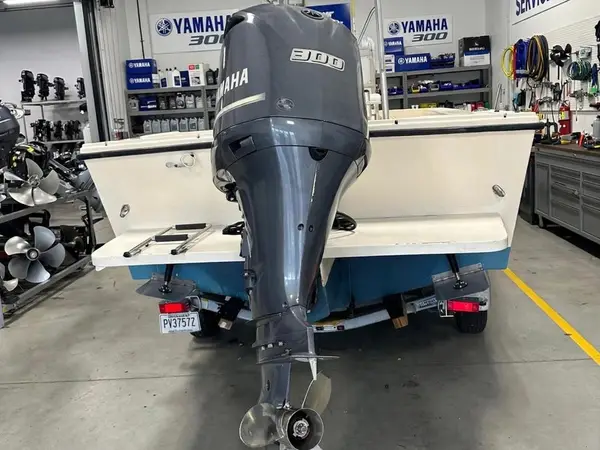 Pre-Owned
2014 Yamaha F300XCA 300HP Four-Stroke — 25" Shaft, 144 Hours, 2-Yr Warranty
- 2014
- 300 HP
- 144 hrs
- 25" shaft
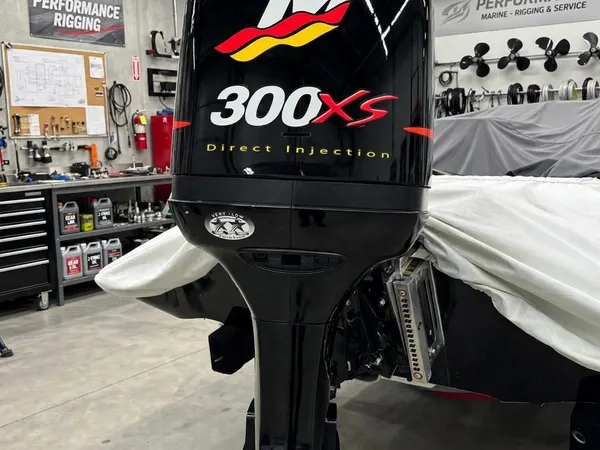 Pre-Owned
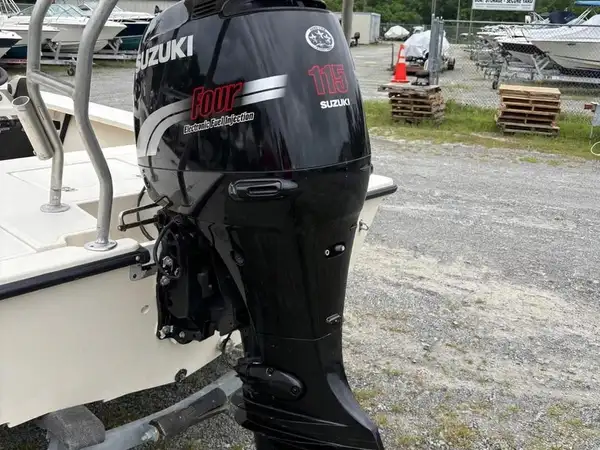 Pre-Owned
2015 Suzuki DF115 115HP EFI Four-Stroke — 20" Shaft, 300 Hours
- 2015
- 115 HP
- 300 hrs
- 20" shaft
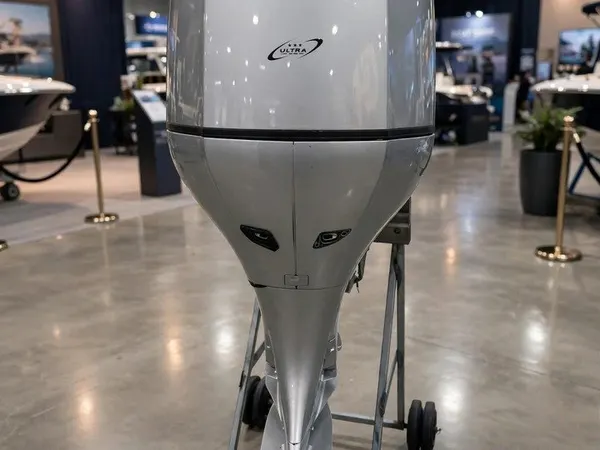 Pre-Owned
 Pre-Owned
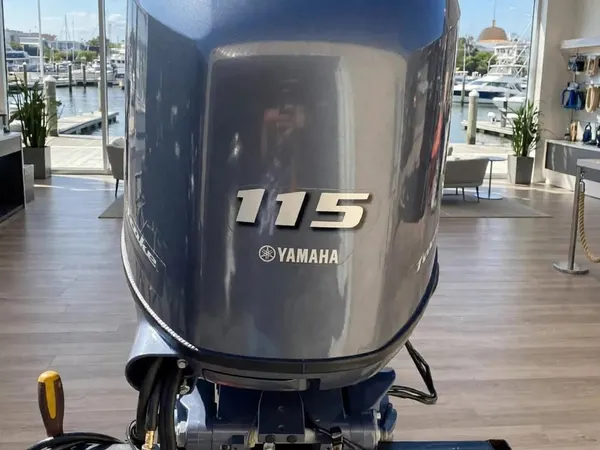
2019 Yamaha 115HP 115HP Four-Stroke — 200 Hours, 2-Year Warranty
- 2019
- 115 HP
- 200 hrs
- 20" shaft
 Pre-Owned
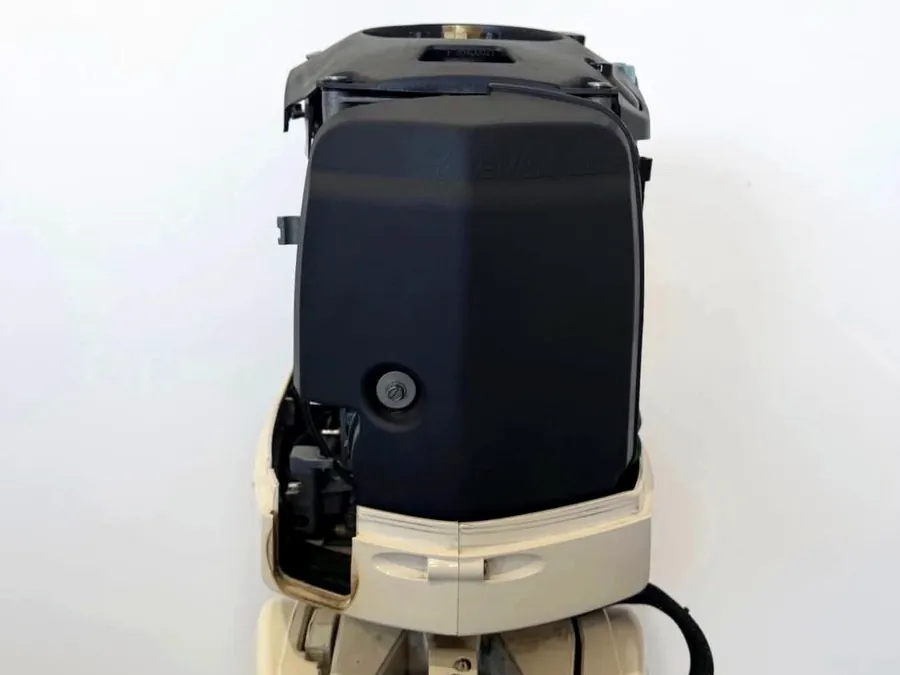
2015 Evinrude E-TEC 90 — 212 Hours, Full Controls & 4-Blade Stainless Prop
- 2015
- 90 HP
- 212 hrs
- 20" shaft
Every motor is photographed as offered and listed with its price, freight and deposit on its page. Comparing options? The pre-owned outboards section groups the full used range, and the pre-owned inventory lists everything currently on the floor.
Frequently asked questions
What compression readings should a healthy used outboard show?
There is no single magic number, because healthy readings vary by engine family, gauge and cranking speed. What matters is consistency: all cylinders should read within roughly 10 per cent of each other. One cylinder well below its neighbours points to damage in that cylinder and is a reason to walk away or price in a rebuild.
How can I verify the hours on a used outboard?
Ask for an ECU hour printout from a dealer diagnostic scan. The engine control unit records total running time independently of the dash, so it is the most reliable figure available. Compare it with the gauge, the service records and the motor's general condition. Small gaps are common and explainable; a large gap with no explanation is a warning sign.
What does milky oil in the lower unit mean?
Milky, coffee-coloured gear oil means water has entered the gearcase, usually past the prop-shaft or shift-shaft seals or a damaged drain-plug gasket. Water corrodes gears and bearings from the inside: fresh seals can be a modest repair, but a gearcase run milky for a season can need a rebuild. Either way it is a repair bill to price in.
Is running the engine on a hose enough before I buy?
No. A hose idle only proves the engine starts and pumps water. It tells you nothing about power under load, shifting under strain, overheating at cruise rpm, or behaviour once fully warm. Insist on a run in the water — or on a test tank or dynamometer — through the full rev range.
What paperwork should a used outboard come with?
Requirements vary by state: some states title outboard motors separately, others register them with the boat, and some do neither for smaller engines. At minimum, get a bill of sale recording the serial number, the seller's details and the sale price, and check the serial on the plate matches the document. Where a title exists, confirm the seller is the name on it. If in doubt, check your state boating authority's current rules before money moves.
Related guides
- Outboard engine hours: what is low, average and high?
- Outboard model numbers decoded
- Repowering your boat: the complete guide
- Outboard shaft length explained
Talk to a specialist
Found a used motor and want a second opinion on its compression figures, hour printout or gear oil? Call +1 754-251-4847 or request a quote with the model and serial from the plate. Browse the inspected range in pre-owned outboards, check the live pre-owned inventory, or read more in the Guides & Advice hub.