Repowering Your Boat: When It Makes Sense, What It Costs, and What to Check
- Repower when the hull is sound and the engine is the weak link — check the transom before anything else.
- Your capacity plate's maximum horsepower is a hard ceiling. Stay at or under it, always.
- The motor is only part of the budget: controls, rigging, gauges, prop and labour decide the real total.
- Modern four-strokes are heavier than the two-strokes they replace — check transom weight and how the boat sits.
- Reuse what genuinely matches; replace what doesn't. Mixed old-and-new rigging is where repowers go wrong.
Every repower starts with the same realisation: the boat is still good. The hull rides well, the layout suits your fishing or your family, and everything works — except the engine, which has become the unreliable, thirsty, parts-hunting part of every trip. A repower swaps that one weak link for modern power while keeping the boat you already know. Done well, it is the best-value move in boating. Done casually, it is how good money gets bolted to the wrong transom.
This guide walks the project in the order experienced riggers do: hull first, numbers second, engine third, budget always.
When a repower makes sense — and when it doesn't
The shop-floor rule of thumb is the five-year test: if a sound hull will give you five or more seasons of use after the swap, a repower almost always beats replacing the boat. Hulls age slowly; engines age fast. A twenty-year-old centre console with a solid deck and transom is a better repower candidate than a ten-year-old boat with soft spots and a flexing transom.
Repower when:
- The engine's repair bills are climbing — a powerhead, lower unit or electronics failure on an old motor can approach the value of the motor itself.
- Parts are getting scarce. Once a model is long out of production, even simple parts become a hunt, and downtime stretches from days to months.
- Your use has changed — more load, longer runs, watersports — and the current engine is simply the wrong tool.
- Fuel and noise have become the story of every trip. A modern four-stroke at cruise can use a third less fuel than an old carburetted two-stroke, and the quiet is not a luxury on a six-hour run.
Think twice when the hull itself needs structural money, when the boat is worth less than the engine you'd hang on it and you plan to sell soon, or when what you really want is a different boat. A repower perfects the boat you have; it doesn't turn it into another one.
Step one: check the hull before you shop for an engine
Engines are easy to change. Transoms are not. Before pricing a single motor, establish that the boat deserves one:
- Transom soundness. The transom carries the engine's full weight and thrust. Flex when you heave on the tilted engine, cracks around the mounting bolts, water weeping from bolt holes, or a dull, hollow sound when tapped all point to a wet or rotting core. A rotten transom must be repaired first — bolting 250 modern horsepower to it is throwing the engine's money after the hull's problem.
- Stringers and deck. Soft deck spots and spongy stringers tell the same story. Walk the whole deck in bare feet; your heels find what your eyes miss.
- The capacity plate. Find it — usually at the helm or on the transom — and photograph it. It states maximum horsepower and maximum persons/weight. These numbers frame the entire project (see below).
- Transom height. Measure from the top of the transom down to the keel line. That measurement sets your shaft length: 15, 20, 25 or 30 inches. Our shaft length guide and the Shaft Length Finder make this a two-minute job.
Same horsepower, or step up?
The capacity plate's maximum is a hard ceiling — set by the hull's flotation and structure calculations, enforced by insurers, and not negotiable because a bigger engine was on sale. Within the ceiling, you have real choice:
- Like for like is the simplest project: same class, same controls style, often the same rigging. If the old engine's power suited the boat, this is the low-risk path.
- One step up (115 to 150, 200 to 250) transforms boats that carry load — dive gear, big crews, full livewells — and is the most common upgrade we see. Check the weight difference as carefully as the power difference.
- One step down is underrated for light-use boats: a smaller, lighter, cheaper engine that still planes the boat comfortably can be the smart money, especially on older hulls.
Our horsepower guide and the Horsepower Finder turn your boat's length, type and load into a recommended band — start there before falling for any specific engine.
The weight question: old two-stroke out, modern four-stroke in
This is the repower trap that catches experienced owners. A modern four-stroke is typically 10–25% heavier than the two-stroke of the same horsepower it replaces, because it carries an oil sump, valvetrain and more structure. On a big offshore hull that difference is trivia. On a small or elderly transom it changes how the boat sits at rest, how it takes off, and whether the scuppers stay above the waterline.
Do the arithmetic honestly: find both engines' published weights, add the difference to everything else that has crept aboard over the years (bigger batteries, a T-top, a second livewell), and compare against the plate. Our guide to how much outboard motors weigh lists typical ranges by class. If the numbers are tight, the lighter engine in the class — or one step down in power — is the right call.
Controls, gauges and rigging: the compatibility layer
An engine is not a self-contained appliance; it is the centre of a system. Whether your existing system can drive the new engine decides half the real budget:
- Mechanical vs digital controls. Cable-shift engines can often reuse a healthy mechanical control box and cables. Digital engines (Yamaha DEC, Mercury DTS, Suzuki SPC and similar fly-by-wire systems) need their electronic control, harness and usually their own gauges or displays. Crossing from mechanical to digital is the single biggest rigging cost in a repower — and also one of the nicest upgrades, with precise low-speed control and clean installations.
- Staying within a brand usually maximises reuse: same control family, same harness plugs, same gauge ecosystem. Crossing brands usually means new controls and harness at minimum.
- Steering. Hydraulic steering in good order transfers across brands with the right cylinder and hoses. Cable steering on a bigger new engine is false economy — budget the hydraulic upgrade.
- The propeller almost never transfers meaningfully. A new engine's gear ratio and power curve want their own prop. Treat a matched prop as part of the engine purchase, and read our propeller guide before choosing pitch on a guess.
Two-stroke to four-stroke swaps deserve one extra note: if you're weighing that jump, our 2-stroke vs 4-stroke comparison covers the real-world trade-offs — weight, fuel, noise, maintenance — without the folklore.
Jack plates: the small part that finishes the job
A jack plate sets the engine back from the transom and lets you dial its height precisely. On a repower it solves two classic problems: an engine that sits slightly wrong on an older transom, and shallow-water boats that need the prop up at idle but biting at speed. Manual plates are cheap, light and set-and-forget; hydraulic plates adjust on the move. If your boat runs skinny water or the new engine's mounting range doesn't quite suit the hull, a plate is worth its modest line in the budget — see the manual jack plate pattern in our rigging section for what the simple end of the market looks like.
DIY or professional install?
Be honest about the class of job:
- Realistic DIY: portables and tiller engines; smaller remote engines on a like-for-like swap, with an engine hoist, a torque wrench, the factory manual and a patient afternoon. The work is mechanical and well documented.
- Professional territory: anything 115 HP and up, every digital-control installation, all twins and multis, and any job involving steering or fuel-system changes. Correct engine height, prop selection, control calibration and a water test under load are what you're paying for — a badly set up 200 performs like a 150.
Either way, the first hours matter: a new or newly fitted engine needs its break-in and first-service schedule respected, and a used engine deserves the full used-outboard inspection before it goes on, not after.
The full budget: line items beyond the motor
Price the project, not the engine. A realistic repower budget includes:
- The engine itself — new or pre-owned (our new motors and pre-owned motors are listed with full pricing).
- Controls and harness — from near-zero on a same-family mechanical swap to a significant kit on a digital conversion.
- Gauges or display — digital engines want their manufacturer's instruments to show everything the ECU knows.
- Propeller — matched to the new gear ratio and your load; stainless if the budget allows.
- Steering parts — cylinder, hoses or a full hydraulic upgrade where needed.
- Batteries and cables — starting capacity and cable gauge for the new engine's demands.
- Labour — de-rigging the old engine, rigging the new one, and the water test.
- Registration and paperwork — title/registration norms for engines vary by state; confirm yours.
As a planning figure, rigging and labour on a straightforward like-for-like swap are often a modest fraction of the engine's price; on a cross-brand digital conversion they can rival a small engine. The only reliable number is a written quote for your boat — which is why we itemise rigging on request rather than guessing.
Repower candidates in stock now
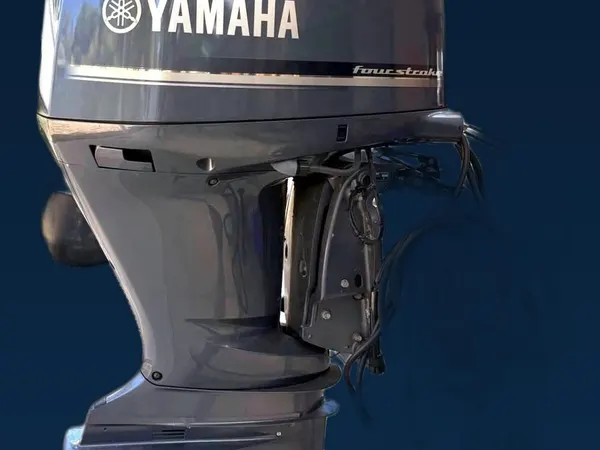 Used — 2020
Used 2020 Yamaha F300 XCA 300 HP Outboard — Freshwater, Full Rigging
- 2020
- 300 HP
- 211 hrs
- 25" shaft
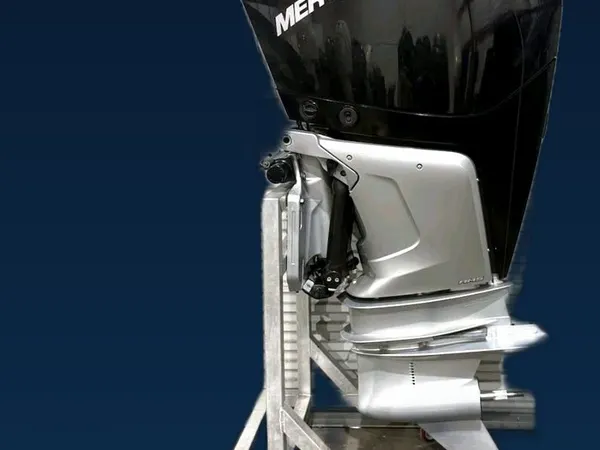 Used
Used Mercury 300 HP V8 Verado Outboard — 116 Hours, Warranty to 03/2029
- 300 HP
- 116 hrs
- 25" shaft
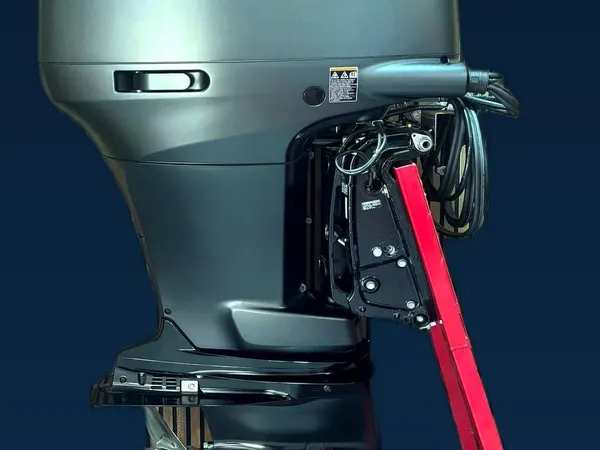 New — Latest Model
New Suzuki DF250A Stealth 250 HP Outboard — Matte Black, SPC 2.0
- 250 HP
- Brand new
- 25" shaft
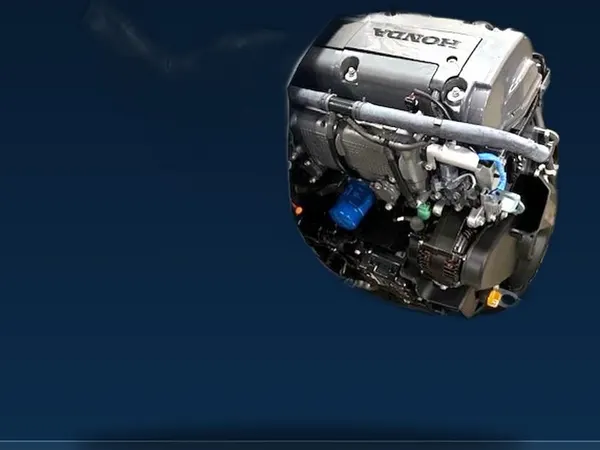 New
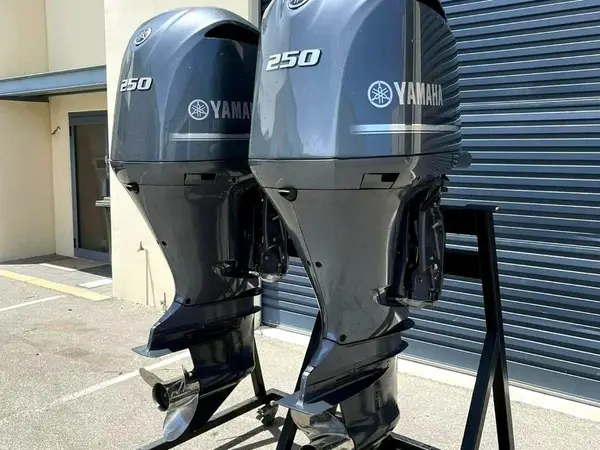 Used — 2010
Used 2010 Yamaha F250 250 HP Twin Pair — 3.3L V6, 25-Inch Shafts
- 2010
- 250 HP
- 25" shaft
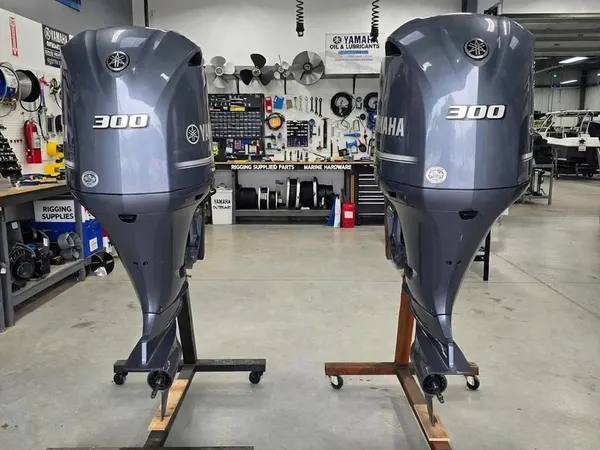 Pre-Owned
Twin 2021 Yamaha F300 300HP Outboards — 25" Shafts, 1200 Hours, Controls Included
- 2021
- 300 HP
- 1200 hrs
- 25" shaft
Every motor is photographed as offered and listed with its price, freight and deposit on its page. Not sure which fits? Try the Horsepower Finder or ask our team.
Frequently asked questions
Is it worth repowering an older boat?
Usually yes when the hull is sound. A solid hull with a tired engine is worth far more repowered than sold as-is, and a modern four-stroke brings quieter running, better fuel economy and electronic reliability. The deciding question is never the boat's age — it is the condition of the transom, stringers and deck. If those are sound, a repower is almost always cheaper than the same capability in a newer boat.
How much does a repower cost beyond the motor?
Budget for rigging as well as the engine. Depending on what can be reused, expect controls, cables or a digital harness, gauges, a propeller matched to the new engine, steering parts, batteries and labour. On a like-for-like swap reusing mechanical controls, the extras can be modest; on a brand or control-system change (mechanical to digital, for example) they are a real line item. Ask for the rigging quote in writing before you commit.
Can I increase horsepower when I repower?
Only up to the maximum on the boat's capacity plate — that figure is a hard ceiling, not a guideline. Within it, stepping up one class (a 150 to a 200, say) is common and often transforms a load-carrying boat. Stepping down is also legitimate for light-use boats. What you cannot do is exceed the plate, and insurers as well as regulators treat that seriously.
Can I fit the new engine myself?
Portable and smaller midrange engines are realistic DIY fits for a careful owner with a hoist and the manual. From roughly 115 HP up — and for any digital-control, twin or rigged installation — professional fitting earns its money in correct setup: engine height, prop selection, control calibration and a first-run check. A badly set-up new engine performs like a smaller one.
How long does a repower take?
The physical swap is often a day or two of work. The real timeline is parts and preparation: confirming rigging compatibility, ordering a control set or prop, and scheduling. Plan the project in the off-season if you can, and confirm every part is on hand before the old engine comes off.
Related guides
- What horsepower outboard motor do I need?
- 2-stroke vs 4-stroke outboard motors
- Single vs twin outboards
- How to choose a propeller
Talk to a specialist
Repowering and want a second opinion on fit, weight or rigging? Call +1 754-251-4847 or request a quote with your boat model and capacity-plate details. Browse brand ranges on the Yamaha and Mercury hubs, or the full inventory.