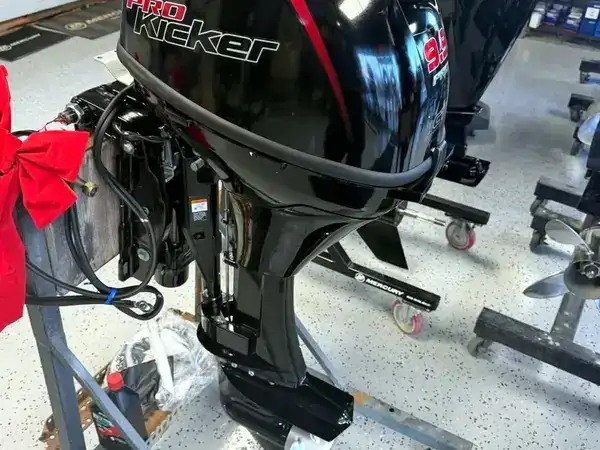
 New
Mercury 9.9 ProKicker CT — Brand New Leftover, 3 Available
- 9.9 HP
- Brand new
- 20" shaft
$2,012
View details →Small motors for dinghies, tenders, jon boats, canoes and little fishing boats — the engines you can carry, clamp on and go.
Portable outboards are the working end of boating: the tender motor that ferries you to the mooring, the jon-boat engine that lives in a truck bed, the kicker that trolls all morning on a cup of fuel. The class runs from roughly 2.5 to 25 horsepower, and everything about it is optimised for the same virtues — low weight, simple systems, and the ability to be carried by one person and maintained on a tailgate.
At the bottom end (2.5–6 HP) are the true carry-aboard motors: single cylinders, often with integral fuel tanks, weighing from about 13 kg (29 lb). They suit inflatables, small dinghies and canoes, and they plane almost nothing — they are displacement-speed motors, and honest about it. The 8–9.9 HP twins are the tender and small-boat sweet spot, and in high-thrust "kicker" form (big gearcase, low-pitch prop) they are the standard auxiliary for larger boats. From 15 to 25 HP, two-cylinder motors start to plane light hulls properly: a 25 on a light aluminium boat is a genuinely quick, economical fishing rig.
Most portables are tiller steered, because the operator sits beside the motor anyway. Remote versions exist for small centre-console and side-console boats. If you are deciding, our tiller vs remote guide walks through the trade-offs, including what a conversion really involves. Weight matters more here than anywhere else in boating — our weight guide lists typical figures by class so you can check a motor against your transom (and your back) before buying.
Portables come in short (15 in) and long (20 in) shafts, and a few in extra-long. Small-boat transoms vary wildly, so measure yours — top of transom to keel line — and match it. A short shaft on a tall transom ventilates; a long shaft on a short transom drags. The Shaft Length Finder turns your measurement into the right answer in seconds.
This is the class where two-strokes still thrive, especially simple carburetted designs and Yamaha's Enduro line, prized for minimal electronics and field-serviceability. If you are comparing technologies, the 2-stroke vs 4-stroke guide covers the honest differences.
Portables are the cheapest outboards to own and the easiest to mistreat. The big three killers are stale fuel in a carburettor over winter, being laid down on the wrong side (four-stroke oil migrates — the manual shows a "this side up" face), and salt water left in the cooling passages. Flush or run the motor after salt use, store it upright, and stabilise fuel for layups; the fuel guide explains why small carburettors suffer first from ethanol-blended fuel. Servicing is correspondingly simple: gear lube, a plug, an impeller every couple of seasons, and an anode check. A portable that gets those basics will usually outlive the boat it pushes — which is why clean used portables sell quickly and why condition, once again, beats the hours figure on the rare examples that even have one.
Two short guides that will save you from the classic mistakes in this class:
4 listings, each photographed as offered with its price, freight and deposit on the product page.
New
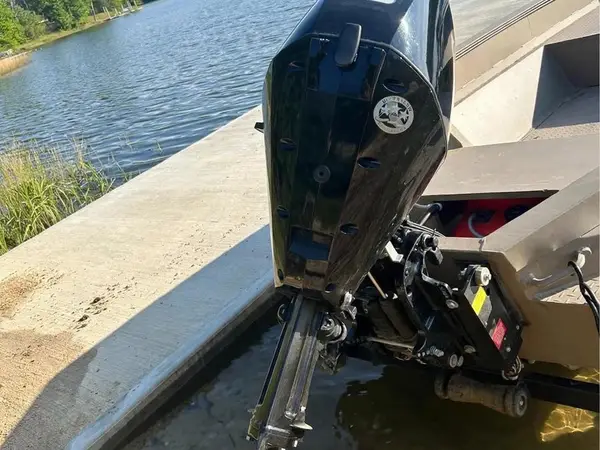 Pre-Owned
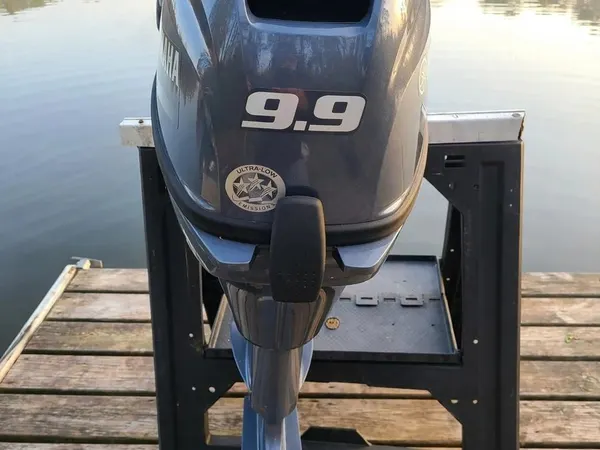 Pre-Owned
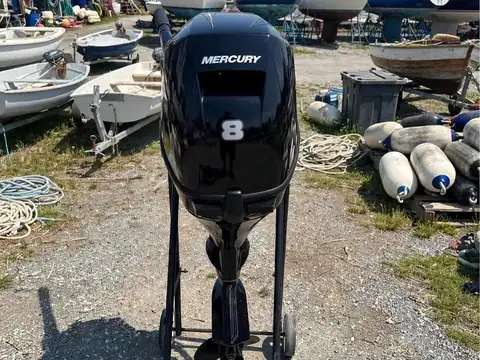 Brand New
For most tenders and small inflatables, 4–9.9 HP is the working range: enough to move a loaded dinghy at hull speed and plane a light one with one person aboard. Very small boats (under about 2.7 m) are often happiest with 2.5–6 HP. Always stay within the boat's capacity-plate maximum.
A 25 HP four-stroke typically weighs 50–60 kg (110–130 lb) — a two-person lift or a trolley job for most people. The comfortable one-person carry range is up to about 15 HP; above that, plan on wheels or a second pair of hands.
Measure the transom: around 15 inches wants a short shaft, around 20 inches a long shaft. Small sailboats and some inflatables use taller transoms. When between sizes, the longer shaft is usually the safer choice on a portable, because it keeps the prop buried in chop.
Yes, for the right use. They are lighter for their power, mechanically simple and tolerant of basic maintenance — which is why simple two-strokes remain popular for tenders, remote use and as working motors. Four-strokes are quieter, cleaner and sip fuel. The right answer depends on your boat and your priorities, not on fashion.
Tell us your boat model, transom height and how you use it — we will point you at the right class and the right unit, new or pre-owned.
WhatsApp +1 754 251 4847 Try the Horsepower Finder