 Pre-Owned
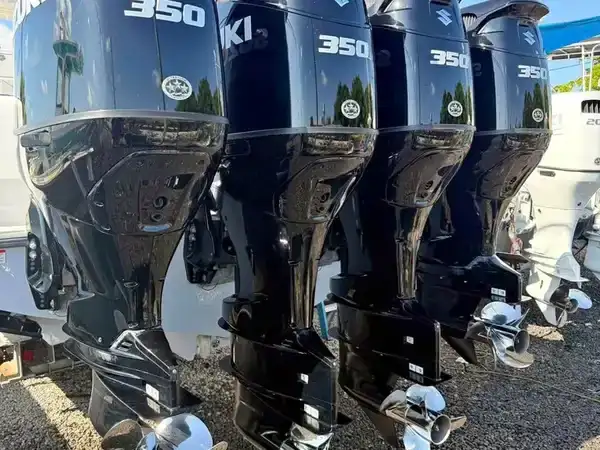
Suzuki DF350 Quad Set — 663 Hours, Full Fly-by-Wire Package, Factory Warranty to 2031
- 350 HP
- 663 hrs
- Quad set
$41,195
View details →Flagship power: 350 HP and above, the engines that move 30-foot-plus centre consoles like skiffs.
Above 350 horsepower, outboards stop being alternatives to inboards and become the default choice for serious offshore boats. These are the flagship platforms — Yamaha's 5.6L V8 XTO Offshore and F350, Mercury's V10 Verado and Racing lines — built to be rigged in singles, twins, triples and quads on 30–45 foot centre consoles, and to cruise at speeds that shrink the map.
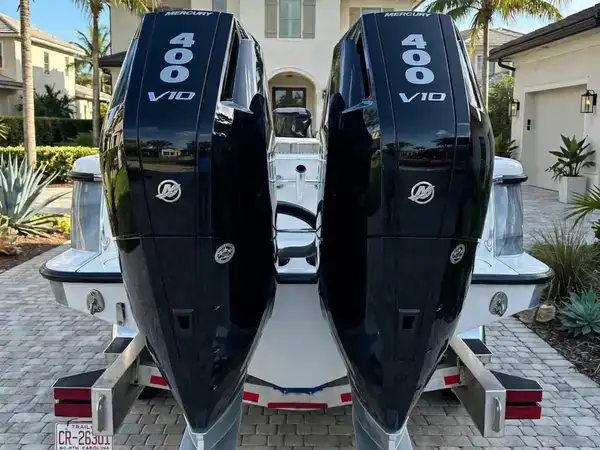
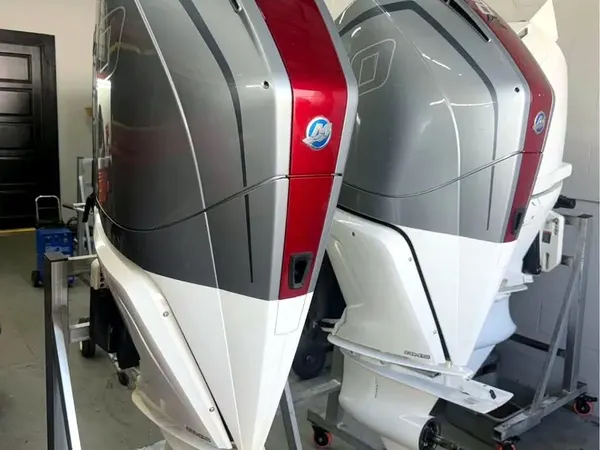
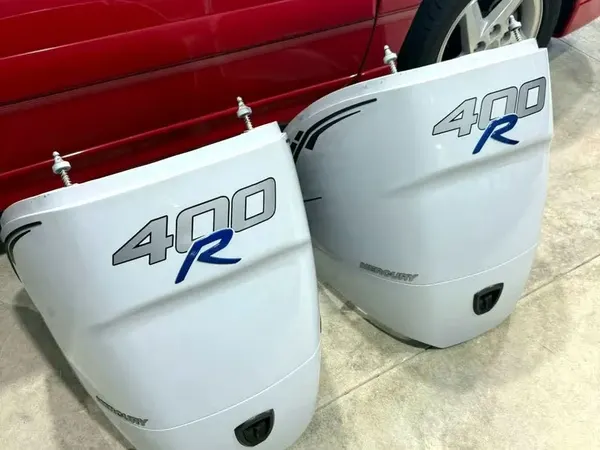
Yamaha's XTO (425 HP) pairs a direct-injected 5.6L V8 with an integrated electric steering system — no hydraulic lines to the helm. The earlier F350 V8 remains a torque legend in twin installations. Mercury's V10 Verado (350/400) brings remarkable quiet and smoothness for its output, and the Racing 450R is the performance flagship: supercharged, lightweight for its power, and built for boats that run hard. Suzuki's DF350 counters with a 4.4L V6 and contra-rotating duo props — two propellers per gearcase for grip that suits heavy hulls.
Boats in this power class are almost always multi-engine. That changes buying: engines should be matched (age, hours, rotation pairing, shaft split across the transom) and rigged as a system with shared digital controls and, increasingly, joystick piloting. Matched sets sell as units for a reason — see the twin & multi sets hub — and our single vs twin guide covers the logic of multi-engine rigs generally.
At this level, the control system is half the product: digital throttles, integrated steering, engine-monitoring displays and autopilot integration. When comparing listings, establish exactly which rigging is included — a bare flagship engine and a fully rigged one are very different purchases. Our model decoder helps with the letters; ask us for the rigging inventory on any specific listing.
Everything scales: fuel burn at cruise can run 25–40 gallons per hour per boat (twins, typical test figures), servicing is per-engine, and props are serious hardware. Owners in this class budget accordingly and are repaid in capability — range, speed and seaworthiness that smaller rigs simply cannot offer. A used flagship with full service evidence is often the value play; run the used checklist at this scale with particular care for ECU hours and lower units.
Flagship ownership is a commitment of a different order: rigging and de-rigging are crane jobs, servicing is scheduled like aircraft maintenance, and the electronics ecosystem (displays, autopilot integration, joystick control) wants a rigger who speaks it fluently. In return you get the defining capability of the modern offshore boat — 40-knot cruises in hulls that fish 60 miles out. When buying pre-owned at this level, insist on the complete evidence pack: ECU printouts per engine, service records, and a rigging inventory, exactly as our used checklist prescribes. A documented flagship is a sound purchase; an undocumented one is a lottery ticket with a cowling.
Two short guides that will save you from the classic mistakes in this class:
10 listings, each photographed as offered with its price, freight and deposit on the product page.
Pre-Owned
 Pre-Owned
 Pre-Owned
 Pre-Owned
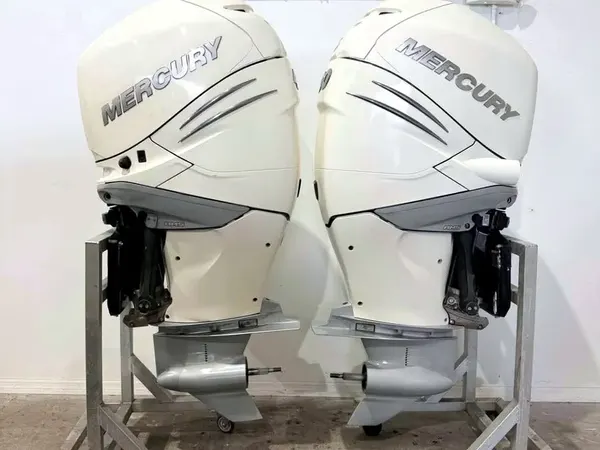 Pre-Owned
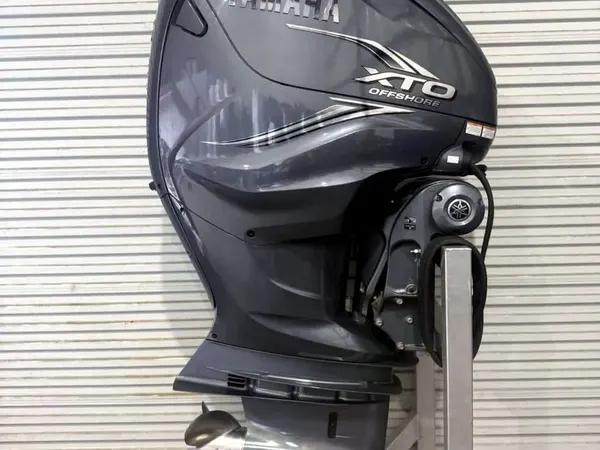 Pre-Owned
 Pre-Owned
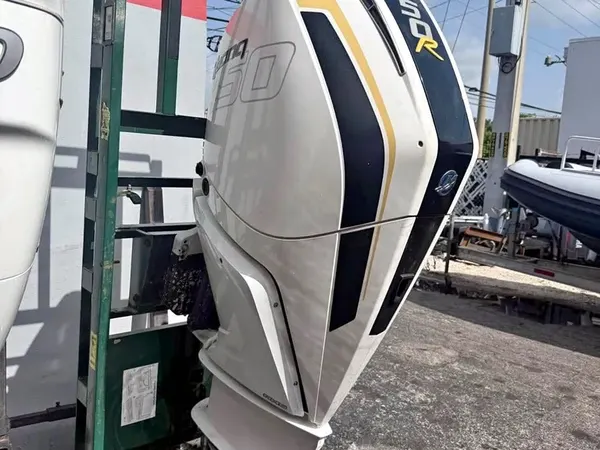 Pre-Owned
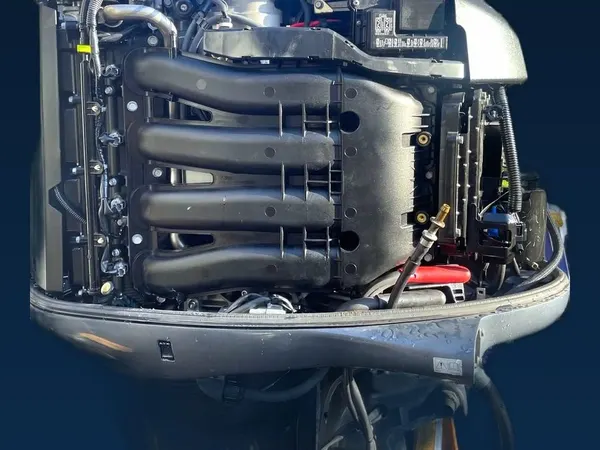 New Old Stock
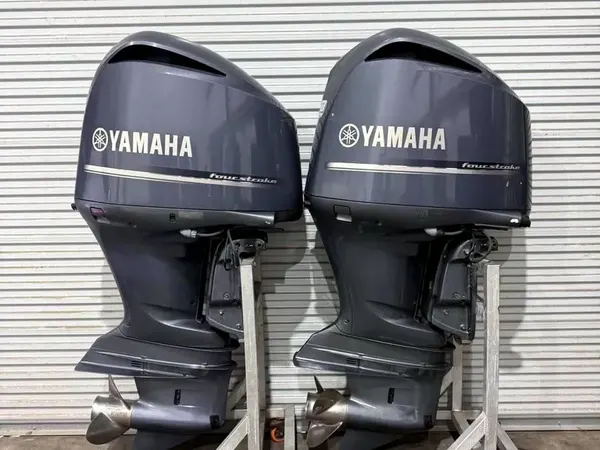 Pre-Owned
By model, year, hours and role: standard and counter-rotating units pair across the transom, and shaft lengths are split to suit the hull's transom steps (outer engines often shorter than centre ones on triples and quads). A matched set shares its service history and rigging, which is why sets are sold complete.
Not need — but on triples and quads, integrated joystick piloting transforms close-quarters handling. It is part of the manufacturer's control ecosystem (Yamaha Helm Master, Mercury Joystick Piloting), so it is decided by the rigging package, not added later as an accessory.
Roughly 440–450 kg (970–1,000 lb) for the Yamaha XTO in 25-inch form — the heaviest mainstream outboards made. Transom engineering is a first-order question on any repower at this level.
Yes — these are current or recent flagship platforms from the major brands with full dealer networks. As with any premium engine, buy on documented service history and verify the specific model's support status with the seller.
Tell us your boat model, transom height and how you use it — we will point you at the right class and the right unit, new or pre-owned.
WhatsApp +1 754 251 4847 Try the Horsepower Finder