Saltwater Outboard Care: Flushing, Anodes and Corrosion Prevention
- Flush with fresh water after every saltwater use — the same day, while salt deposits are still soft.
- Ear muffs let the engine run and circulate water properly; the flush port is for engine-off flushing. Never run an engine dry.
- Anodes are meant to be eaten away. Replace them at about half consumed and never paint them.
- Sandy or silty water wears impellers fast — shorten the interval if you run skinny, silty water.
- Wash, dry and corrosion-spray the powerhead on a routine; slipped boats need the discipline doubled.
Salt water is the finest boating environment there is, and it is quietly corrosive to everything it touches. An outboard is built to live in it, but the design assumes the owner holds up one end of the bargain: a short, regular care routine after every trip. None of it is difficult or expensive. What it punishes is neglect, because salt damage accumulates invisibly inside cooling passages, under brackets and around electrical connections until the bill arrives all at once.
Flushing: the single most valuable habit
Inside every outboard, seawater travels a labyrinth: up through the lower unit, around the powerhead's cooling passages, past the thermostat, and out through the tell-tale and exhaust. When the engine stops, that water stays behind. As it evaporates it leaves salt crystals, which build into scale that narrows the passages and eventually restricts flow enough to overheat an engine that has nothing else wrong with it. Flushing with fresh water after every saltwater use — the same day, while deposits are fresh and soluble — prevents the build-up entirely.
There are two correct ways to flush, and one dangerous misunderstanding to avoid:
- Ear muffs (flush muffs) fit over the water intakes on the lower unit and connect to a garden hose. With the engine running at idle in neutral, the water pump draws normally and water circulates through the entire cooling path, thermostat included. This is the most complete flush. Keep the engine at idle, stay with it, and watch that the tell-tale stream is strong — a weak stream means the muffs have slipped or supply is poor.
- The flush port, fitted to many modern engines, is a hose connector that rinses the powerhead's passages with the engine off. It is quick and dock-friendly where running the engine is impractical — but follow the manual, because on most engines the port does not supply the water pump adequately.
- Never run the engine dry. Even a few seconds without water can heat and damage the rubber impeller, and a minute can destroy it. Water first, then start; stop the engine, then water off. That order, every time.
Five to ten minutes of flushing at idle, until the water running out is clear and no longer tastes of salt, is the standard. In brackish water the same routine applies with less urgency; in pure salt water it is non-negotiable.
Anodes: the metal that sacrifices itself
Put dissimilar metals in salt water and you have built a battery: current flows, and the more reactive metal corrodes. The engineer's answer is the sacrificial anode — a block or plate of zinc (or an aluminium alloy, increasingly common and preferred in brackish water) bolted to the lower unit, bracket or powerhead, deliberately made the most reactive metal in the system. It corrodes so the engine does not. You will also meet it as a trim-tab anode on the lower unit, which doubles as a steering trim fin.
An anode doing its job looks eaten, pitted and diminished. Replace it when it is about half consumed — beyond that its protective current falls away — and treat a bright, untouched anode on a salt-water engine as a warning, not a blessing: paint, corrosion film or a poor connection can insulate it into uselessness. Anodes must sit on clean bare metal, must never be painted, and their fasteners must be tight. On a slipped boat, add anode condition to every haul-out inspection; consumption there is continuous, not per-trip.
The impeller in sandy and silty water
The water pump's rubber impeller lives in the lower unit and is the heart of the cooling system. In clean water it commonly serves the interval in your manual — often one to three years. Sand and silt change the mathematics: every pass through a shallow, silty flat pumps an abrasive slurry through the pump, scouring the impeller's vanes and housing. Engines that regularly run skinny water or launch from sandy ramps should treat the impeller as a shorter-interval item — annually is cheap insurance — and flush with extra care, since the same grit lodges in passages. The warning sign is a weakening tell-tale stream and rising temperatures at idle. Impeller replacement sits squarely inside the normal service routine set out in how to maintain an outboard motor and the maintenance checklist.
Wash-down and corrosion spray: the exterior discipline
After flushing, wash the whole motor down with fresh water, paying attention to where salt hides: under the cowling's rim, around the midsection and swivel bracket, the tilt tube, mounting bolts and electrical connections. A soft brush and ordinary boat soap are enough. Then let it dry — tilting down drains the lower unit and exhaust on most installations.
Under the cowling, a light corrosion-inhibitor spray on metal surfaces, linkages and electrical connectors, applied to a dry engine a few times a season, keeps aluminium corrosion from taking hold and connectors making clean contact. Keep spray off belts and out of air intakes. While the cowling is off, look — really look — at hoses, clamps and wiring, and check the tell-tale outlet for salt crust and insect nests.
Trailer boats vs slipped boats
The trailer boat's exposure ends when it leaves the ramp. The slipped or moored boat lives immersed, and its care shifts weight: flushing may happen through the port at the dock or on every haul; anodes work around the clock and are consumed accordingly; growth must be kept off the water intakes; and every underwater fastener joins the inspection list. Slipped-boat engines benefit most from disciplined haul-out inspections — anodes, impeller, gearcase seals and mounting hardware checked together, on the schedule in our maintenance checklist — and from running the engine regularly, since circulation and heat cycles are themselves a form of protection. Whichever way your boat lives, the principle is the same: salt is patient, so the owner has to be regular.
For rigging, electronics and the accessories that support dockside care, browse the marine electronics section alongside the motors below.
Shop the motors in this guide
 Pre-Owned
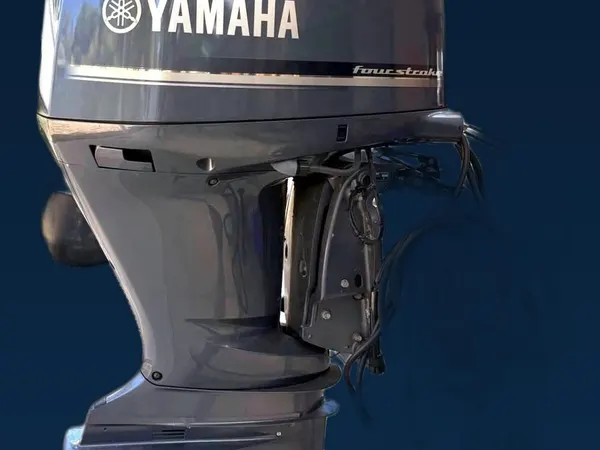 Used — 2020
Used 2020 Yamaha F300 XCA 300 HP Outboard — Freshwater, Full Rigging
- 2020
- 300 HP
- 211 hrs
- 25" shaft
 Pre-Owned
2019 Yamaha F300 — 356 Hours, Complete Fly-by-Wire Rigging Package
- 2019
- 300 HP
- 25" shaft
 Used — 2016
Used 2016 Suzuki DF300AP 300 HP Outboard — 275 Hours, Propeller Included
- 2016
- 300 HP
- 275 hrs
Saltwater service is written into the working life of motors like these — every motor is photographed as offered and listed with its price, freight and deposit on its page.
Frequently asked questions
How soon after a trip should I flush the engine?
The same day, ideally as soon as the boat is out of the water or back at the dock. Salt begins crystallising as the engine dries, and a flush done while deposits are still soft is far more effective than one done a week later. Make flushing part of the unload routine, not a separate chore to remember.
Can I run the engine on the flush port?
No — unless your owner's manual explicitly says otherwise, and most do not. The flush port (the hose connector on many modern engines) is designed to flush with water pressure alone, engine off. Running the engine on the port can starve the water pump because water may not reach the impeller in sufficient volume. To flush with the engine running — which circulates water through the thermostat and the whole cooling path — use ear muffs over the lower-unit intakes so the pump draws normally.
How often should anodes be replaced?
Inspect them at every service and replace them when they are roughly half consumed — an anode that is mostly gone protects nothing, and one that has stopped corroding in salt water may have passivated or lost electrical contact and should be checked rather than celebrated. In warm, high-salinity water, consumption is faster. Never paint an anode, and keep its mounting surface clean bare metal: an anode only works while it is electrically connected to the metal it protects.
Does a trailer boat really need all this?
Yes, though its exposure is measured in hours rather than months. Salt water sits in the cooling passages after every trip, and corrosion works between trips, in the driveway. The trailer boat's routine — flush, wash, dry, spray — is short precisely because the boat comes home each time. The slipped boat adds continuous immersion, where anodes and more frequent impeller and anode checks do the heavy lifting.
Can corrosion really damage an engine that still runs fine?
Absolutely — corrosion is quiet until it is expensive. Salt attacks inside the cooling passages (restricting flow until the engine overheats), at fasteners and brackets you rarely remove, and around electrical connections, where it creates intermittent faults that are miserable to diagnose. An engine can run perfectly with corrosion well advanced. Prevention is cheap; inspection is the only way to know.
Related guides
- How to maintain an outboard motor
- Outboard motor maintenance checklist
- How to winterize an outboard motor
Talk to a specialist
Questions about a motor you are looking at? Call +1 754-251-4847 or request a quote with the stock number from the listing. Browse the full inventory, or start from the Yamaha, Mercury, Suzuki and Honda hubs.