Outboard Fuel Guide: Ethanol, Stabilizer, Filters and Octane, Without the Myths
- E10 is fine in most modern outboards in regular use — storage, not ethanol itself, is where the trouble starts.
- Phase separation is the real enemy: once the ethanol-water layer drops out, no additive reliably reverses it.
- Run the octane your manual specifies. Premium is not automatically better and can be pure wasted money.
- Untreated fuel can begin degrading in roughly 30 days; stabilizer and a full tank buy you a season, not forever.
- A fuel/water separator and a 10-micron filter are cheap insurance for injectors and carburettors alike.
Fuel causes more outboard problems than any mechanical failure — and most of them start at the pump or in the tank, weeks before the engine misbehaves. The good news is that marine fuel is a solved problem once you understand three things: what ethanol actually does, what octane actually means, and how quickly petrol ages. This guide works through each one plainly, without the dockside myths.
E10 explained: what is in the tank
Most pump petrol sold for road use contains up to 10% ethanol, labelled E10. Modern outboards are built for E10: fuel lines, seals, pumps and injectors on engines of the last two decades use ethanol-compatible materials, and owner's manuals typically approve E10 explicitly. Higher blends such as E15 and E85 are a different matter: no outboard should run them unless its manual says so.
Ethanol has two properties that matter in a boat. First, it is hygroscopic: it absorbs water from the air. A boat's fuel tank breathes through its vent as temperatures rise and fall, and every breath brings in humid air. Second, ethanol is a solvent that can loosen years of varnish and debris from an older tank and lines, sending it toward the filter. Neither property makes E10 dangerous in a boat used weekly; both make it unforgiving in a boat that sits.
Phase separation: the failure that matters
Ethanol can hold a small amount of water in suspension. Past a threshold — roughly half a percent of water in the fuel, reached after months of humid breathing — the blend gives up. The ethanol and water drop out of the petrol together and sink, forming a distinct layer at the bottom of the tank. This is phase separation, and it is a double failure: the bottom layer, which the fuel pick-up draws first, is watery, corrosive and will not run an engine; the petrol above it has lost ethanol and some of its octane rating.
Two facts about phase separation are worth fixing in memory. It cannot be shaken or stirred back together — the separation is stable, not a suspension. And no pour-in additive reliably reverses it. Separated fuel has to come out of the tank and be disposed of properly. Prevention — fresh fuel, a full tank, stabilizer, a sound vent and cap seal — is the whole game.
Stabilizer: what it does and when to add it
Petrol ages by oxidation: exposed to air and heat, its lighter components evaporate and its heavier ones form gum and varnish that coat injectors, jets and tank walls. Fuel stabilizer is an antioxidant treatment that slows that process. It works best added to fresh fuel, at the pump or immediately after, then run through the engine for a few minutes so treated fuel reaches lines, pump, filter and injectors. Dosing already-stale fuel in spring does little — the degradation has already happened.
Add stabilizer at every fill if the boat may sit for more than a few weeks, and always at the final fill before storage. Store the tank full — a full tank leaves little air space, which means less moisture to absorb and less oxygen to drive oxidation. Then run the engine long enough to circulate the treated fuel. For the full lay-up sequence around that final fill, see our guide on how to winterize an outboard motor.
Filters and the fuel/water separator
Modern fuel injection works to tolerances that a grain of rust can block, and carburettor jets are finer still. A boat-mounted fuel/water separator — the spin-on canister, often rated at 10 microns, between tank and engine — is the standard defence: it filters particles and collects water in the canister or a see-through bowl, where it can be seen and drained before the engine drinks it.
Fit one if your boat lacks one, size it to the engine's fuel flow, and service it on schedule: elements are commonly changed annually or at the manual's interval, and immediately if the bowl shows water or debris. Carry a spare element aboard — a clogging filter announces itself as an engine that runs at idle and starves at speed, and the swap at anchor takes five minutes. The engine's own inline filters belong on the same maintenance schedule.
Octane, without the myth
Octane is the most misunderstood number on the pump. It measures a fuel's resistance to knock — uncontrolled ignition of the fuel-air mixture under compression, heard as pinging and capable of damaging pistons if sustained. It does not measure energy content, cleaning power or quality. An engine needs enough octane for its compression ratio and tuning, and no benefit flows from extra.
So the rule is unglamorous: run the octane your owner's manual specifies. Most outboards are tuned for regular-grade fuel, and premium buys them nothing measurable; a minority of high-performance engines genuinely require higher octane, and their manuals say so. Ethanol-free petrol, sold at some marinas, solves the water-absorption issue, not the octane question — it still comes in grades, and the same manual rule applies.
Storage timelines: how long fuel really lasts
Petrol begins to degrade surprisingly fast. As a working timeline for a vented marine tank: untreated fuel can start losing volatility and forming deposits in roughly 30 days, faster in heat; by three to six months it is a gamble an engine may lose; stabilized fuel in a full tank is commonly rated for a year and often serves a full storage season well.
The practical habits: buy fuel for the use you actually have, rotate portable tanks rather than letting a can sit all season, and never top fresh fuel onto fuel you already suspect — dilution does not restore degraded petrol. For winter lay-up, fuel treatment is one step in the sequence covered by our winterization guide.
Symptoms of bad fuel — and where they lead
Bad fuel rarely stops an engine outright at first. The classic progression is: harder starting, a rough or hunting idle, hesitation or surging under load, lost top-end speed, and finally stalling or a no-start. Water adds spitting, misfiring and, on engines with a water-in-fuel sensor, a warning. Left alone, the deposits behind those symptoms clog filters and injectors, lean out cylinders, and turn a fuel problem into a repair bill. If your engine shows that pattern, work it in order — fuel first, because it is the most likely culprit — using the step-by-step in our outboard troubleshooting walk-through, and keep the broader service picture in view with how to maintain an outboard motor.
Shop the motors in this guide
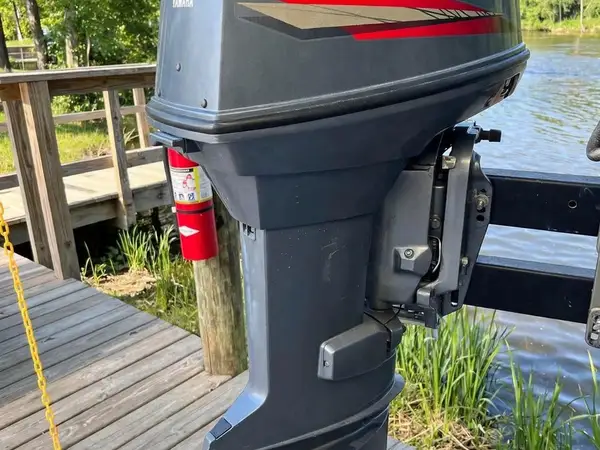 Pre-Owned
2000 Yamaha 60HP two-stroke 60HP 2-Stroke — Oil Injected, 290 Hours, Immaculate
- 2000
- 60 HP
- 290 hrs
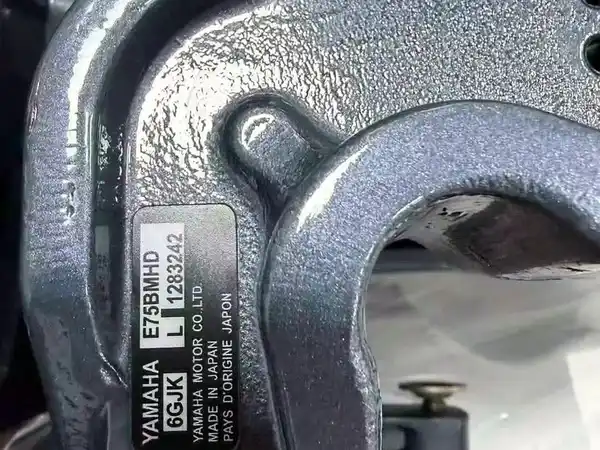 New
Yamaha Enduro 75 2-Stroke — Brand New in Crate, Long Shaft, Export Ready
- 75 HP
- Brand new
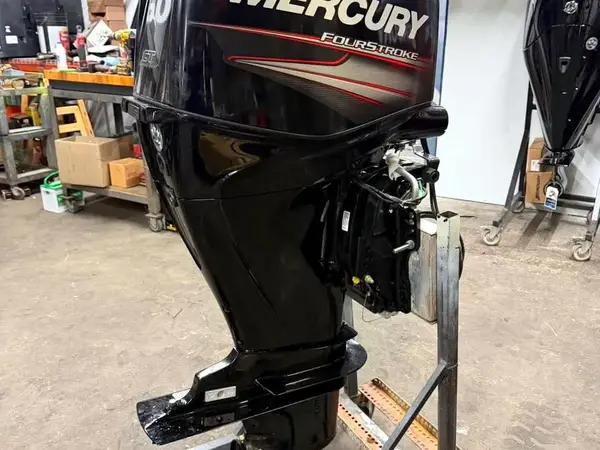 New
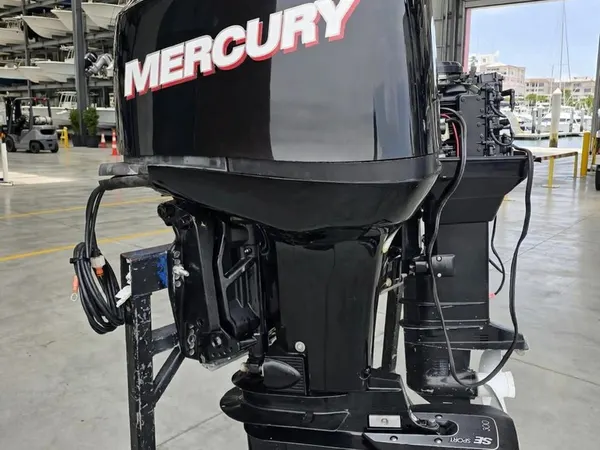 Pre-Owned
2009 Mercury 75HP Optimax DFI Outboard — Only 194 Hours, Fully Serviced
- 2009
- 75 HP
- 194 hrs
- 20" shaft
Carburetted two-strokes, modern four-strokes and everything between all live or die by the fuel in the tank — every motor is photographed as offered and listed with its price, freight and deposit on its page.
Frequently asked questions
Is E10 fuel safe in my outboard?
For most modern outboards, yes — fuel systems have used ethanol-compatible materials for years, and manuals generally approve fuel up to E10 (10% ethanol). The risk is rarely ethanol itself on a boat in regular use; it is storage, because ethanol attracts water and sitting fuel can absorb enough to phase-separate. Older engines with fuel lines of unknown age deserve extra care and fresh fuel.
What octane should I run?
The octane in your owner's manual — no more, no less, unless the manual lists a range. Octane measures resistance to pre-ignition (knock), not energy or cleaning power. Running premium in an engine tuned for regular adds cost without adding power, and running below the specified octane risks detonation, which can damage pistons. A small number of high-performance engines genuinely require higher octane; their manuals say so plainly.
How long does boat fuel last?
Untreated petrol in a vented marine tank can begin to degrade in roughly 30 days, and the process accelerates in heat and humidity. Stabilized fuel, stored in a full tank, is commonly rated by stabilizer makers for 12 months or more. The practical rule: fuel you would not trust after a season should be used up, not topped up.
What does a fuel/water separator actually do?
It does two jobs. Its filter element traps particles — rust, tank debris, scale — before they reach fine injectors or carburettor jets. And because water is heavier than fuel, water settles into the bottom of the canister or a clear bowl where it can be seen and drained instead of being drawn into the engine. It is a guard, not a cure: a separator cannot rescue fuel that has already phase-separated.
Can I fix phase-separated fuel with an additive?
No. Once ethanol-blended fuel has absorbed enough water to phase-separate, the water-and-ethanol layer at the bottom cannot be reliably re-blended by pouring in an additive, whatever the bottle implies. The separated layer is also corrosive and low in octane. The correct fix is to pump out the bad fuel, dispose of it properly, inspect the tank and lines, and refill with fresh fuel — then find out how the water got in.
Related guides
- How to winterize an outboard motor
- Outboard won't start? A calm diagnostic walk-through
- How to maintain an outboard motor
Talk to a specialist
Questions about a motor you are looking at? Call +1 754-251-4847 or request a quote with the stock number from the listing. Browse the full inventory, or start from the Yamaha, Mercury, Suzuki and Honda hubs.