Propellers Explained: Pitch, Diameter, Blades and Material — How to Choose
- Pitch is the main tuning lever: roughly 1 inch of pitch change moves wide-open-throttle rpm by about 150–200 rpm.
- The only reliable test is rpm at wide-open throttle under your normal load — the engine must reach its rated WOT range, not lug below it or bounce off the limiter above it.
- Four blades trade a little top speed for grip, smoothness and stern lift; three blades remain the efficient default.
- Stainless steel holds its shape and performs better; aluminium is cheaper, lighter and kinder to the gearcase in a strike.
- A repower almost always needs a re-prop: a new gear ratio and power curve make the old propeller a starting point, not an answer.
The propeller is the only part of your powertrain that actually touches the water, and it is the cheapest performance part on the boat — yet it is usually chosen by copying whatever the last owner ran. Two numbers stamped on the hub, diameter and pitch, decide whether your engine can reach its rated rpm, how the boat jumps onto plane, what it cruises at and what it burns doing it. Get them right and the whole boat feels sorted. Get them wrong and a healthy engine feels gutless or strained.
This guide explains the numbers in plain language, gives you the one test that settles every propeller argument, and covers blades, materials and venting. If a new engine is what prompts the question, read it alongside our repower guide — a propeller matched to the new engine belongs in every repower budget.
Diameter and pitch: what the two numbers mean
Diameter is the width of the circle the blades sweep, in inches. It is largely decided by the engine: gearcase size and blade clearance under the anti-ventilation plate. Bigger, slower-turning props on large gearcases suit heavy boats and low-speed thrust; smaller diameters suit light, fast hulls. In practice, diameter is the number you change least — propeller families for your engine come in a narrow band.
Pitch is the tuning number: the theoretical distance, in inches, the propeller would travel forward in one revolution if it were screwing through a solid with no slip. A 19-pitch prop would move 19 inches per revolution in that imaginary solid; in water, slip means it moves less. Higher pitch is a taller gear — more travel per revolution, more engine load, lower full-throttle rpm. Lower pitch is a shorter gear: the engine revs more freely and accelerates harder. Like bicycle gears, the right pitch is the one that lets the engine work in its strong range under your normal load.
The test that matters: wide-open-throttle rpm
Every outboard has a rated wide-open-throttle (WOT) rpm range in its specifications — a band such as 5,000–6,000 rpm. The propeller's job is to let the engine reach that band, ideally the upper half of it, at full throttle with the boat loaded the way you normally run it: typical crew, fuel, gear and water conditions. This single test cuts through every opinion about props, because an engine that cannot reach its range is telling you the gearing is wrong.
Run the test properly. Load the boat normally — testing light and empty, then wondering why the engine lugs with six people aboard, is the classic error. Trim out to the boat's normal running attitude, find sheltered water, and hold full throttle long enough for rpm and speed to settle. Note the rpm. Then interpret it:
- Rpm below the rated range means the engine is over-propped — too much pitch (or a damaged or fouled prop). The engine is lugging: working hard at low rpm, accelerating slowly, and straining components. Chronic lugging is genuinely harmful, not merely slow.
- Rpm at or above the top of the range, or hitting the rev limiter, means the engine is under-propped — too little pitch. It feels eager but wastes the engine's top end, burns extra fuel for the speed, and a limiter bouncing on every run is not a cruising plan.
- Rpm in the upper half of the range is the target: full power available, healthy loading, and headroom for the extra passenger or the head sea.
The rule of thumb: an inch of pitch is worth 150–200 rpm
Once you have your WOT figure, pitch maths gets simple. As a widely used rule of thumb, changing pitch by about 1 inch moves wide-open-throttle rpm by roughly 150–200 rpm, in the opposite direction: more pitch, fewer rpm; less pitch, more rpm. If your engine turns 5,200 rpm against a rated range topping out at 6,000, you are about 600–800 rpm short, which points to roughly 3–4 inches less pitch. If it turns 6,300 and kisses the limiter, add about 2 inches.
Treat the rule as a compass, not a guarantee. Blade design, cup, diameter and hull type all bend it, and two propellers of the same stamped pitch from different families can run noticeably differently. Change in sensible steps, retest the same way, and remember that a propeller change also moves cruising rpm and economy, not just the top-end number — most owners should optimise for the load and speed they actually run, with WOT rpm as the boundary condition that must be satisfied.
Three blades or four?
Three blades are the default for good reason: less blade area in the water means less drag, better top-end speed and good all-round efficiency for most hulls. If your boat planes easily, runs at moderate weight and behaves well, a three-blade is usually the right answer.
Four blades put more blade area to work. The payoff is grip and smoothness: quicker planing, a lower minimum planing speed, better hold in turns and rough water, useful stern lift for heavy or stern-loaded boats, and typically less vibration. The cost is a small top-speed penalty — often a knot or two — and a higher price. Boats that struggle to plane, carry variable heavy loads, run offshore in chop or tow watersports generally gain more from the fourth blade than they lose at the top end. Neither count is a quality marker; they are tools for different hull behaviours.
Aluminium or stainless steel?
Aluminium propellers are the honest workhorses: inexpensive, light, and available for nearly every engine. Their softer blades flex slightly under load, which costs a little performance, and they bend or break in a strike — also their hidden virtue, because a prop that sacrifices itself can spare the gearcase the worst of the impact. For shallow, debris-filled water and modest engines, aluminium makes complete sense.
Stainless steel is five or more times stronger, so blades can be cast thinner, hold their shape and cup under load, and keep their edges. The result is better bite, better efficiency and better durability in sand and shell, at several times the price and with less give in a hard strike. On midrange and high-power engines — the classes in our Mercury and Yamaha ranges — stainless is the mainstream choice because the performance is repeatable season after season. Whichever material you choose, carry a spare prop and the wrench to change it: a bent prop thirty miles out is a long, slow, expensive day.
Venting and PVS plugs, in plain terms
Some stainless propellers have small holes in the barrel ahead of the blades, fitted with removable plastic plugs — Mercury's PVS (Performance Vent System) is the best-known version. With plugs removed or partly open, exhaust gas escapes through the holes at low rpm and bubbles over the blades, letting the prop slip and the engine rev up quickly as you throttle up — the marine equivalent of a slipping clutch launching a car. As speed builds, water flow seals the holes and the prop bites normally. Venting helps heavy boats and high-pitch setups jump onto plane; it does nothing at cruise. If your holeshot is fine, leave the plugs in and ignore the whole subject happily.
When a repower means a re-prop
Assume a repower includes a propeller decision until proven otherwise. A different engine almost certainly has a different gear ratio, a different power curve and often a different WOT range, so the old prop — even if the splines fit — is geared for a machine that no longer exists. The same applies when you change how the boat is used: a repower, a new T-top and hardtop, a permanent extra fuel tank, or a switch from solo fishing to family load-carrying all move the WOT number. Re-test after any significant change, and budget the matched propeller as part of the project, the same way you would budget controls and rigging from the marine electronics and rigging side of the catalogue. The stamp on the hub is small; the difference it makes is the whole boat.
Shop the motors in this guide
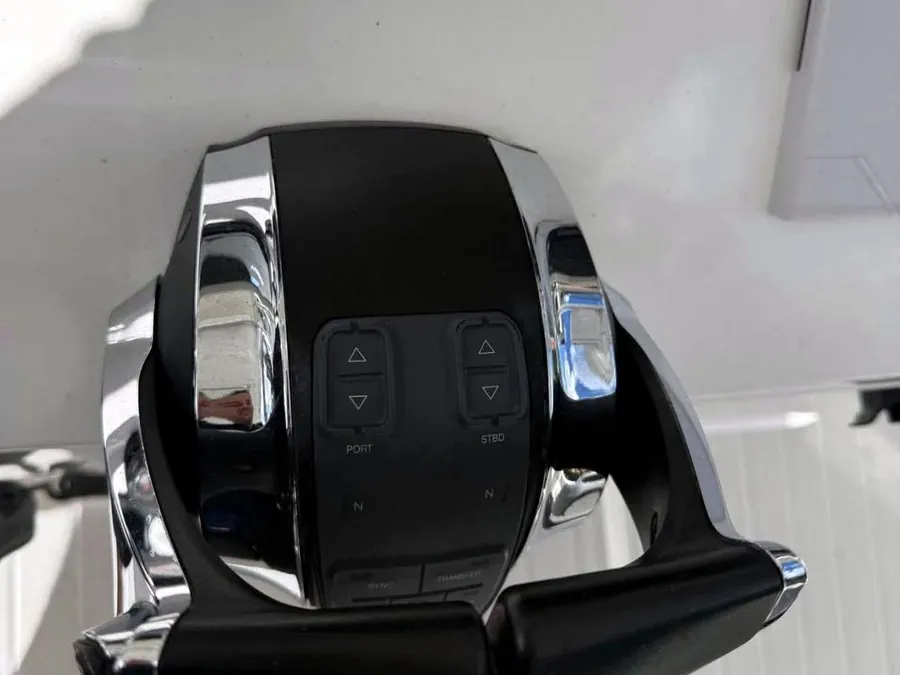 Used
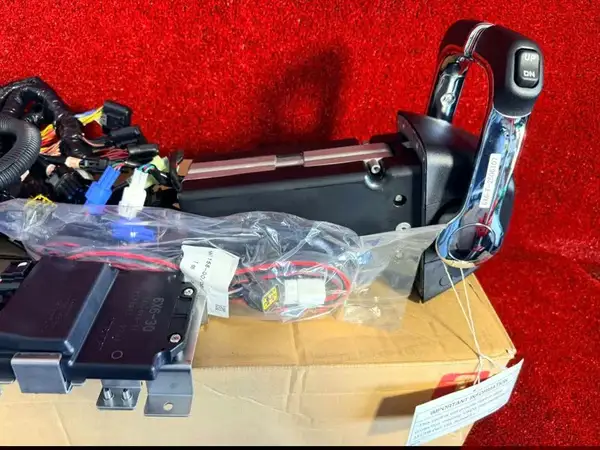 New
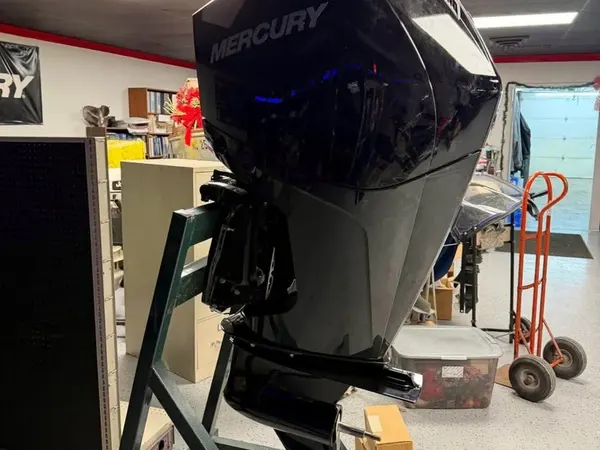 New
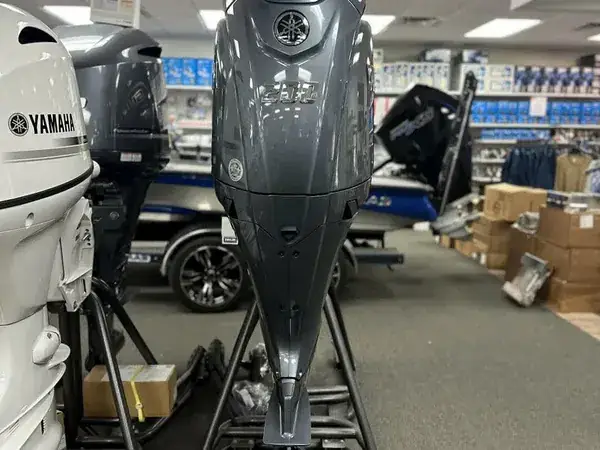 New
2025 Yamaha F200XD — Integrated Hydraulic Steering, 25" Shaft, Brand New
- 2025
- 200 HP
- Brand new
- 25" shaft
Controls and rigging decide how a new propeller's power actually reaches the water — these are the rigging pieces and engines from this guide's discussion. Every item is listed with its price, freight and deposit on its page; browse the full marine electronics range for more.
Frequently asked questions
What happens if my engine cannot reach its rated wide-open-throttle rpm?
It is over-propped — almost always too much pitch — and it is lugging. The engine works under heavy load at low rpm, accelerates poorly and strains internal components over time. Drop pitch in steps of about 2 inches, retesting under your normal load, until wide-open-throttle rpm sits in the upper half of the rated range.
What if my engine revs past the top of its range?
It is under-propped: too little pitch for the load. The engine feels lively but wastes its top end, burns more fuel for a given speed and may bounce off the rev limiter. Add pitch — roughly 1 inch per 150–200 rpm you need to take away — and retest under normal load.
How much speed will one inch of pitch change give me?
There is no fixed figure, because speed depends on the hull, load and propeller design. The reliable rule of thumb works in rpm, not knots: about 1 inch of pitch is worth roughly 150–200 rpm at wide-open throttle. Choose pitch to put the engine in its rated rpm range under your normal load, and let the speed be what the boat gives you.
Is stainless steel always better than aluminium?
No. Stainless blades are thinner, stronger and hold their shape, so they perform better and last longer — but they cost several times more and transmit more of a hard strike into the gearcase. Aluminium is cheaper, lighter and more forgiving in shallow or debris-filled water. Match the material to your engine size, your water and your budget, and carry a spare either way.
Can I keep my old propeller when I repower?
Sometimes it physically fits, but it is rarely right. A new engine usually has a different gear ratio, power curve and rated rpm range, so the old propeller is geared for the engine you removed. Treat it as a reference point, run the wide-open-throttle test, and expect to change pitch — or propeller — to land in the new engine's range.
Related guides
- Repowering your boat: when it makes sense, what it costs, and what to check
- Single vs twin outboards: cost, safety, manoeuvrability and fuel compared
- How to compare marine outboard engines
Talk to a specialist
Not sure which propeller your boat and engine need? Call +1 754-251-4847 or request a quote with your engine model, current propeller size and your wide-open-throttle rpm under normal load. Browse engines on the Mercury and Yamaha hubs, or the full inventory.