Tiller vs Remote Steering: Which Control Setup Suits Your Boat?
- Tiller steering is the simplest, lightest and cheapest setup: steer, shift and throttle from one handle at the stern.
- Remote steering moves the operator forward to a helm — better visibility, better weight distribution and the natural setup for bigger boats and longer runs.
- Many engines convert between tiller and remote with a factory kit, but controls, cables and labour belong in the budget.
- Electric start and power trim matter more as engines grow: rope-starting a midrange engine gets old fast.
- Boat size is the usual decider — tillers dominate small open boats, remotes take over as hulls, horsepower and distances grow.
Every outboard is steered one of two ways: by a tiller handle attached to the engine, with the operator at the stern, or remotely, from a helm forward with a steering wheel and a separate control box for throttle and shift. The choice sounds like a fitting detail. In practice it shapes where you sit, what you can see, how the boat trims, how much deck you keep and what the installation costs.
Neither setup is better in the abstract. Each is right for a class of boat and a style of use — here is how to tell which class yours is in.
Tiller steering: simple, direct and aft
A tiller engine is a self-contained machine. Steering, shifting and throttle all live on one handle; on most models the stop switch, and on many the starter button, are there too. There is no steering cable to run and no helm station to build, which makes the response immediate and the feedback honest — you feel exactly what the propeller is doing.
That simplicity is why tillers own the small-boat world of dinghies, tenders, jon boats and inflatables in the portable outboard class. A tiller rig is lighter, cheaper to buy and install, and leaves the whole boat open: no console means full deck space for fishing, crabbing or hauling gear. Sitting aft puts the operator at the stern, where the action is for trolling or working pots, and a clamp-on engine can come off for storage or use on a second boat.
The costs are posture and perspective. You sit at the back — the lowest, furthest-aft seat — looking over the bow, with weight tending aft, so a small boat can run bow-high until crew shuffle forward. Long runs mean an arm extended to the handle, and in a chop the stern is not the softest seat. None of that matters on a twenty-minute run to a fishing mark; all of it matters on a two-hour crossing.
Remote steering: the helm moves forward
Remote steering separates the operator from the engine. A wheel at a console works the engine through a mechanical cable, a hydraulic system or, on digital engines, an electronic link, while a control box at the helm handles throttle and shift. The operator sits amidships or forward, where the ride is softer, the view over the bow is clear, and spray is somebody else's problem.
That position is why remotes take over as boats grow. Weight forward helps the boat plane level; a helm allows proper instruments, electronics and a windscreen; passengers sit safely ahead of the operator. For family boats, centre consoles and anything making longer runs at speed, remote control is not an upgrade — it is the format the boat was designed around. The price is real, though: a helm structure, steering gear, control box, cables or harness and gauges all join the bill, the installation is fixed rather than portable, and there is more to maintain.
The conversion question: can you switch later?
Often, yes. Most manufacturers offer conversion kits for many portable and midrange models: steering and remote hardware one way, a tiller handle assembly the other. But "a kit exists" is not "a Saturday job with no other costs." A tiller-to-remote conversion also needs the steering system, a control box, control cables of the right length and usually a harness extension. On some models no conversion is offered at all, and larger factory tiller engines are their own specific variant rather than converted remote engines.
The practical rule: converting is sensible when the engine is exactly right and the kit is factory-supported; it is false economy when the parts bill approaches the price difference to the engine in the configuration you want. Price the complete job — kit, controls, cables and labour — before deciding, and browse both configurations in the full inventory.
Electric start, trim and the tiller squeeze
Control type interacts with two other choices. The first is starting: small tiller engines are commonly rope-start — simple and battery-free — while electric start adds a battery, charging circuit and weight. Rope-starting a small portable is a non-event; rope-starting a larger midrange engine on a cold morning is a chore most owners convert away from, and remote installations assume electric start almost by definition.
The second is trim and tilt. Manual tilt on a small engine is a lift and a pin; on heavier engines, power trim and tilt turns a wrestling match into a button — and on a tiller that button needs to be on or near the handle, which is why larger factory tiller models integrate the trim switch into the grip and some offer powered steering assistance against tiller torque. Compare the whole control package — start, trim, where the switches fall to hand — not just the steering method. Our guide to choosing the right outboard motor puts these decisions in their full order.
Which suits which boat?
As a working summary: choose a tiller for open boats roughly up to the mid-teens in feet, portable and light midrange power, and fishing or utility work where deck space and stern access matter. Choose remote for consoles and helm boats, higher horsepower, longer and faster runs, and family use. The grey zone — bigger open boats offered in both formats — is decided by distance and load: the longer your typical run and the more people you carry, the more the helm earns its space.
Shop the motors in this guide
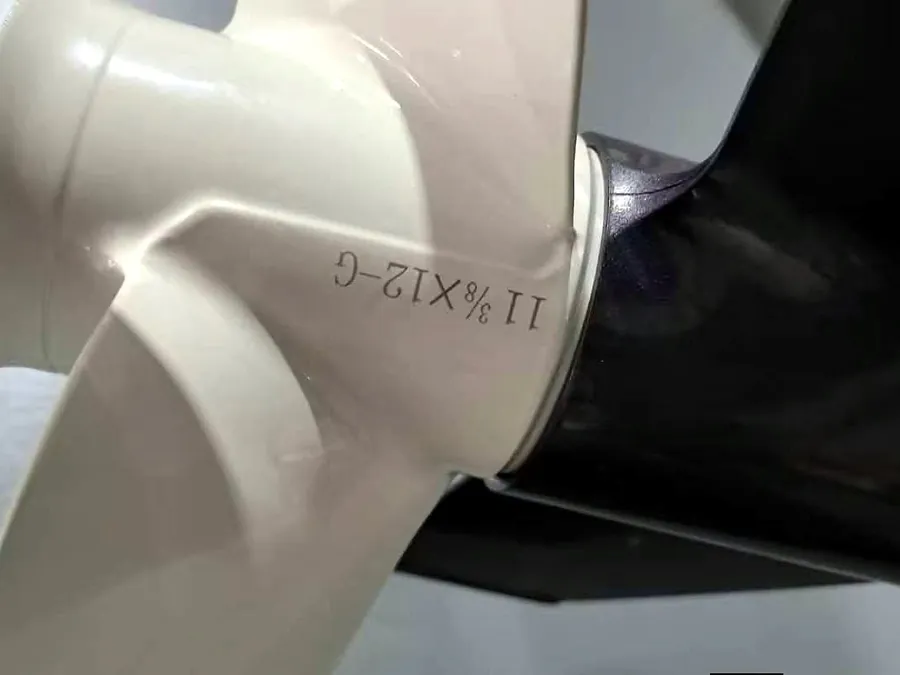 New
Yamaha Enduro 40J — Brand New 40 HP Two-Stroke, Long Shaft, Manual Tiller
- 40 HP
- Brand new
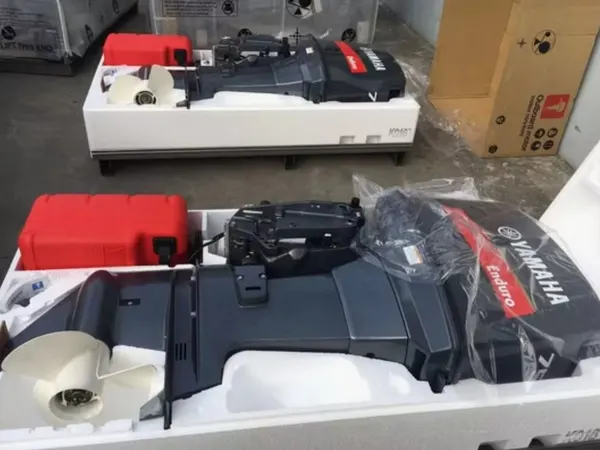 New
New 2023 Yamaha Enduro 60 HP 2-Stroke Tiller Outboard Motor
- 2023
- 60 HP
- Brand new
- Tiller
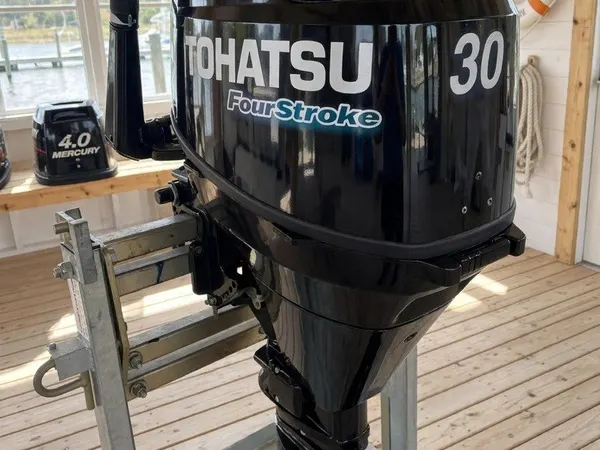 Pre-Owned
Used Tohatsu 30HP EFI FourStroke Outboard — Short Shaft Tiller, Serviced
- 30 HP
- Short shaft
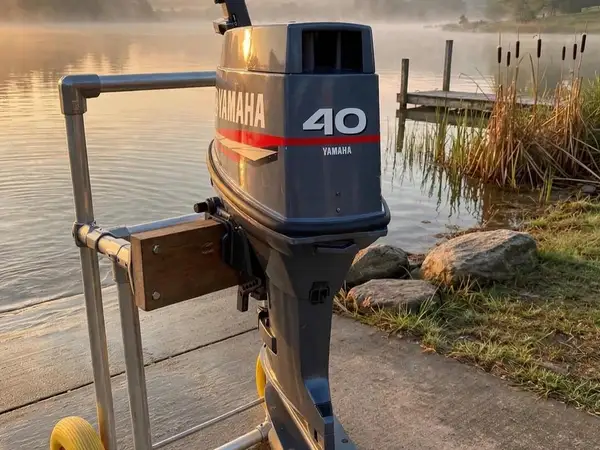 Pre-Owned
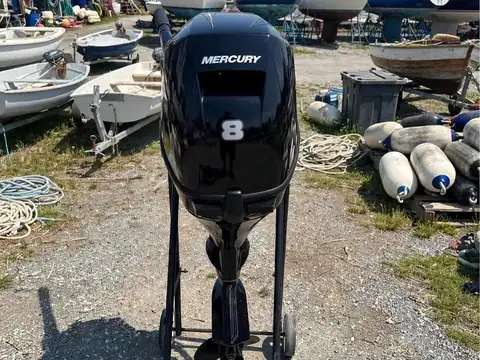 Brand New
2023 Mercury 8MH 8HP FourStroke Outboard — Brand New, 6-Year Warranty
- 2023
- 8 HP
- Brand new
- 15" shaft
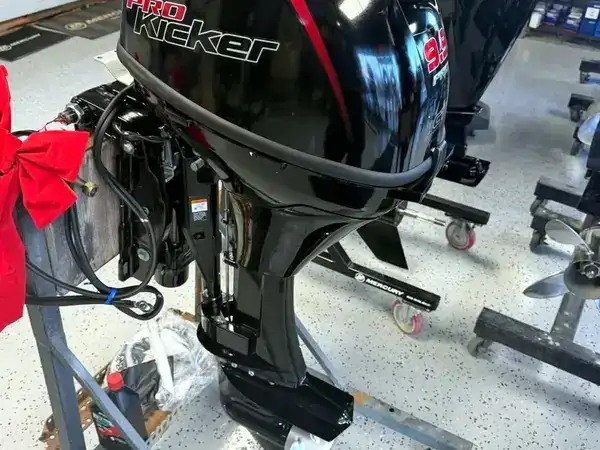 New
Mercury 9.9 ProKicker CT — Brand New Leftover, 3 Available
- 9.9 HP
- Brand new
- 20" shaft
Small and portable engines are where the tiller-versus-remote decision lives — these listings show both formats, each with its price, freight and deposit on its page. See also the portable outboard range for the full class.
Frequently asked questions
What size engine can I run with a tiller?
Tillers are standard on portable engines and common through the midrange. Manufacturers also build dedicated larger tiller models — some with integrated trim switches and powered steering assistance to manage tiller torque — but comfort and control effort, not availability, set the practical limit for most owners. If you regularly make long runs, a helm will usually suit you better well before you reach the largest tiller models.
Can a tiller engine be converted to remote steering?
For many portable and midrange models, yes, with a factory conversion kit — but the kit is only part of the job. A remote setup also needs a steering system, a control box, correctly sized control cables and usually harness extensions. Price the complete conversion, including labour, and compare it with the cost of an engine supplied in remote configuration.
Can a remote engine be converted to a tiller?
Sometimes, where the manufacturer offers a tiller handle kit for that model. It is less commonly worthwhile: the boat's helm and steering gear become redundant, and some engines were never offered in tiller form. Check kit availability for the exact model before buying an engine with conversion in mind.
Does remote steering cost more to maintain than a tiller?
Generally, yes, because there is more to maintain. A tiller has no steering cable, control cables or hydraulics. A remote installation adds cable replacement over time, hydraulic fluid and seals on hydraulic systems, and control-box wear items. The difference is modest per year but real over the life of the boat.
Which setup is better for fishing?
It depends on the fishing. Tiller steering keeps the operator at the stern beside the rods, gives precise low-speed control for trolling and working structure, and leaves the deck completely open. Remote steering suits fishing that involves longer runs between marks, more crew, and a helm's electronics. Many serious small-boat anglers choose tiller deliberately; most larger sportfishers are remote by design.
Related guides
- How to choose the right outboard motor for your boat
- How much does an outboard motor weigh?
- Outboard motor shaft length explained
Talk to a specialist
Choosing between a tiller and a remote setup for your boat? Call +1 754-251-4847 or request a quote with your boat type, engine size and how far you typically run. Browse the portable range or the full inventory to compare both formats.